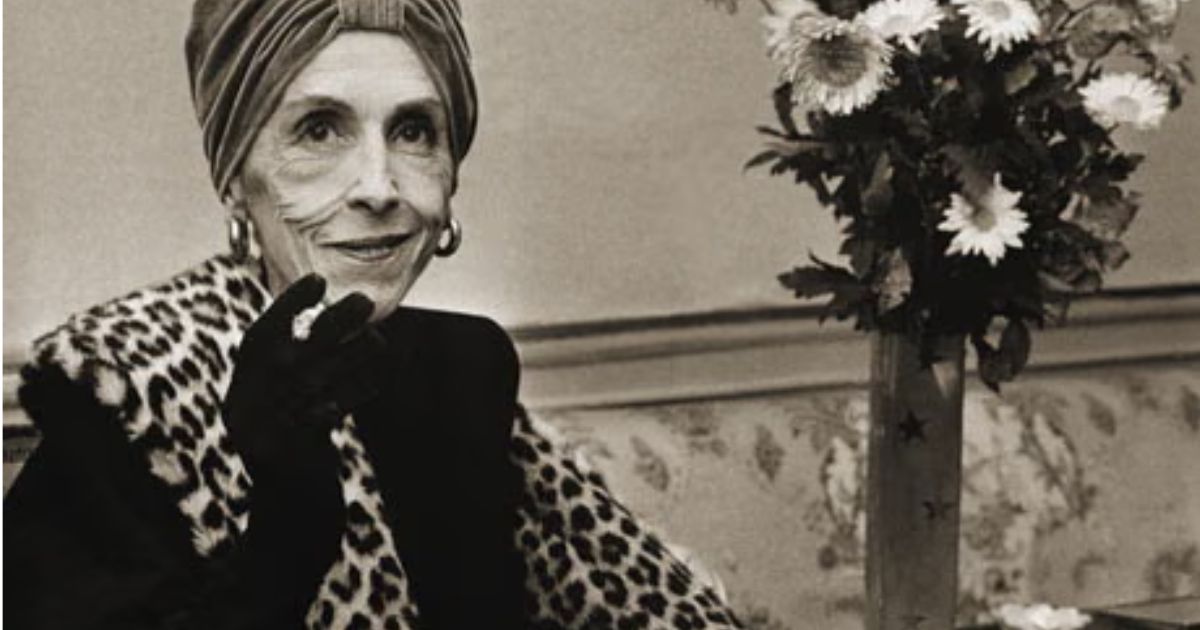
In the realm of world literature, few Danish women have left as indelible a mark as Karen Blixen. Known by her pen name Isak Dinesen, this aristocratic author captivated global audiences with her lyrical tales of adventure, love, and loss. Born in Rungstedlund, Denmark, Blixen transformed her extraordinary life experiences—running a coffee plantation in Kenya, enduring heartbreak, and battling illness—into timeless masterpieces like Out of Africa and Babette’s Feast. Her works, blending gothic romance with vivid African landscapes, earned her multiple Nobel Prize nominations and inspired Academy Award-winning films.
Karen Blixen’s legacy endures as a symbol of Danish resilience and creativity, making her a perennial favorite in searches for “famous women from Denmark,” “influential Danish authors,” and “Danish female writers.” From her aristocratic roots to her pioneering spirit in colonial Africa, Blixen’s story inspires women worldwide. This in-depth biography explores her life, literary achievements, challenges, and why she remains Denmark’s most celebrated female literary icon.
Early Life: Aristocratic Roots in Rungstedlund
Karen Christentze Dinesen was born on April 17, 1885, in Rungstedlund, a picturesque estate north of Copenhagen, Denmark. She was the daughter of Ingeborg Westenholz and Wilhelm Dinesen, a military officer, adventurer, and author who tragically died by suicide when Karen was just 10. This loss profoundly shaped her, instilling a fascination with storytelling as a way to process grief.
Growing up in a privileged Unitarian family, young Karen—nicknamed “Tanne”—was educated at home and later attended art school in Copenhagen, Paris, and Rome. She studied painting but harbored literary ambitions from an early age, publishing her first stories under pseudonyms like Osceola. Influenced by her father’s tales of Native American adventures and her mother’s conservative values, Blixen developed a romantic, aristocratic worldview that rejected bourgeois norms.
In her youth, Blixen fell in love with her cousin, Baron Hans von Blixen-Finecke, but he rejected her. Heartbroken, she accepted a marriage proposal from his twin brother, Bror von Blixen-Finecke, in 1912. The union promised adventure: funded by family, they moved to Kenya to start a coffee farm.
Adventure in Africa: Love, Loss, and Literary Inspiration
Arriving in British East Africa (now Kenya) in 1913, Karen married Bror in Mombasa on January 14, 1914, becoming Baroness Blixen. They established the Karen Coffee Company on a 4,500-acre farm at the foot of the Ngong Hills. Life in Africa was exhilarating—safari hunts, encounters with Maasai and Kikuyu tribes, and a sense of boundless freedom. Blixen wrote: “Here at long last one was in a position not to give a damn for all conventions.”
But challenges mounted. The high-altitude farm struggled with coffee yields, and Bror’s infidelity led to Blixen contracting syphilis in 1915. She returned to Denmark for treatment, returning cured but forever impacted. The marriage crumbled; they divorced in 1925.
Blixen’s true love was British adventurer Denys Finch Hatton, who shared her passion for Africa. Their romance, filled with flying safaris and storytelling under the stars, inspired much of her work. Tragically, Finch Hatton died in a plane crash in 1931. That same year, bankrupt from the farm’s failure and the Great Depression, Blixen sold the estate and returned to Denmark at age 46—devastated but determined.
Rise to Literary Fame: Isak Dinesen and Global Acclaim
Back at Rungstedlund with her mother, Blixen reinvented herself as a writer. Using the pseudonym Isak Dinesen (“Isak” meaning “one who laughs” in Hebrew), she published Seven Gothic Tales in English in 1934 to reach a wider audience. The book was a sensation in America, praised for its archaic, fairy-tale style.
Her masterpiece, Out of Africa (1937), a memoir of her Kenyan years, blended nostalgia, philosophy, and vivid prose: “I had a farm in Africa at the foot of the Ngong Hills.” It became a bestseller, followed by Winter’s Tales (1942) and Babette’s Feast (1950), a novella about sacrifice and joy.
Blixen wrote in English and Danish, publishing under names like Pierre Andrézel. Nominated for the Nobel Prize multiple times (losing reportedly due to Scandinavian bias), she hosted literary salons and corresponded with icons like Marilyn Monroe.
Her style—gothic, fate-driven, and aristocratic—drew from Hans Christian Andersen, the Bible, and Arabian Nights. Themes of destiny, gender roles, and human dignity resonated deeply.
Challenges and Resilience: Health Struggles and Defiance
Blixen’s life was marred by illness. Syphilis treatments left her with chronic pain, stomach issues, and partial paralysis. Multiple surgeries, including a failed spinal operation, confined her to frail health. Yet, she wrote prolifically, dictating when unable to type, declaring: “All sorrows can be borne if you put them into a story.”
As a woman defying conventions—running a farm alone in a male colonial world, loving freely—she embodied Danish women’s emerging independence.
Legacy: Films, Museums, and Enduring Influence
Karen Blixen died on September 7, 1962, at 77, from malnutrition related to her illnesses. Her funeral drew thousands; her ashes scattered at Rungstedlund.
Her impact:
- Films: Out of Africa (1985) won 7 Oscars, starring Meryl Streep. Babette’s Feast (1987) won Best Foreign Film.
- Honors: Rungstedlund is now the Karen Blixen Museum. Asteroid 3318 Blixen named for her.
- Global Reach: Translated into dozens of languages, her works inspire feminists, writers, and travelers.
Today, Blixen tops searches for “famous Danish women” and “Danish female authors.” Her Nairobi suburb is named Karen; Kenya’s Karen Blixen Museum preserves her home.
Why Karen Blixen Matters Today: A Beacon for Danish Women
In an era celebrating strong women, Karen Blixen exemplifies courage. As Denmark’s most influential female writer, she proved adversity fuels art. Her message? Embrace destiny with grace and laughter.
For fans of “women from Denmark” or “Danish literary legends,” Blixen’s tales remind us: Life is a story worth telling boldly.
Karen Blixen wasn’t just an author; she was Denmark’s soul in words.