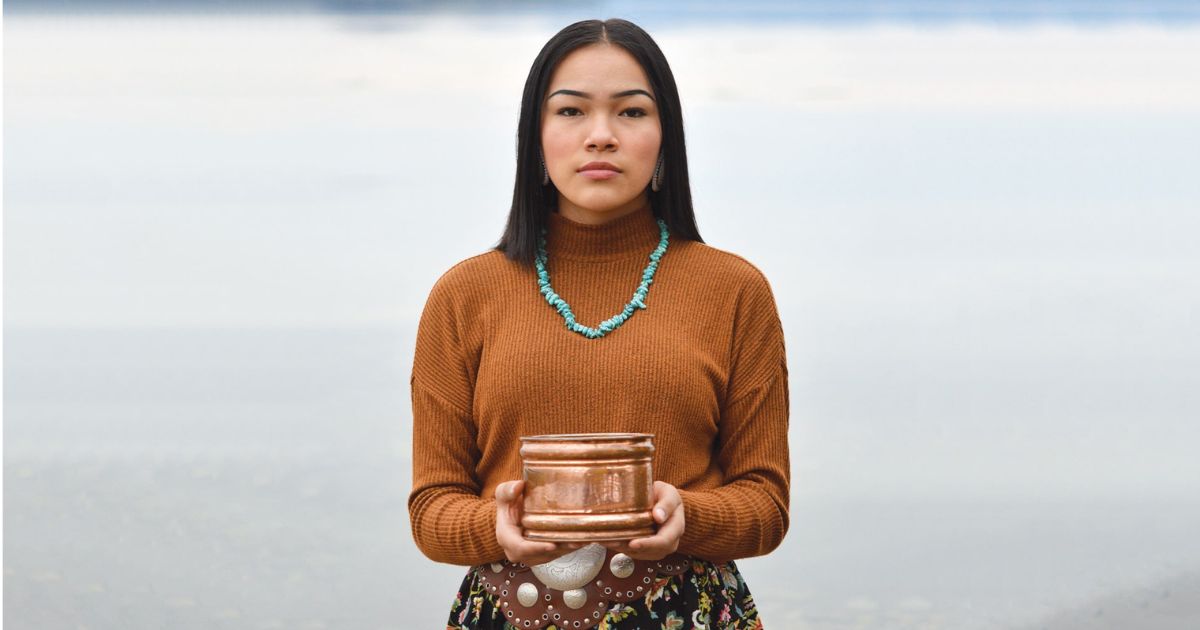
Imagine a 15-year-old girl standing before the United Nations General Assembly, her voice steady and unyielding, declaring to world leaders: “Peace is still possible, but only if we treat each other with kindness and respect… and if we can have clean drinking water.” That’s Autumn Peltier in 2019, a young Anishinaabe girl from Wiikwemkoong Unceded Territory on Manitoulin Island, Ontario. At just 10 years old, she had already been named Chief Water Commissioner for her nation. Today, at 26, she’s a global force for her relentless fight against water injustice, climate change, and the systemic erasure of Indigenous voices.
In a country as vast and water-rich as Canada, it’s a bitter irony that thousands of Indigenous communities still boil their water or haul it from distant sources. Autumn isn’t just calling out the problem – she’s demanding solutions, one bold speech, one protest, one policy shift at a time. Her story is a testament to Indigenous resilience, youthful audacity, and the unbreakable power of women leading from the front lines.
This is the saga of a water protector who turned a family legacy into a worldwide movement. Buckle up – it’s a ride through pipelines, parliaments, and the pure heart of activism.
Who is Autumn Peltier? From Manitoulin Island to the World Stage
Born on November 27, 1999, in a tight-knit Anishinaabe community, Autumn grew up surrounded by the teachings of her people: Nibi (water) is life, a sacred relative that sustains all beings. Her great-aunt, Josephine Mandamin, wasn’t just family – she was a legend. In 2003, Mandamin co-founded the Mother Earth Water Walk, a 10,000-kilometer trek around the Great Lakes to raise awareness about water pollution. When Mandamin passed in 2014, 15-year-old Autumn stepped into her moccasins, vowing to carry the torch.
It wasn’t a glamorous start. Autumn’s early activism was grassroots: joining water walks, learning Anishinaabemowin (the language), and witnessing firsthand how boil-water advisories trap families in cycles of poverty and health crises. By 2016, at age 16, she was addressing the UN in New York, urging indigenous youth to “use your voice.” Fast forward to 2025, and Autumn’s influence is undeniable. She’s testified before Canada’s parliamentary committees, met with Prime Minister Justin Trudeau (and called him out on unfulfilled promises), and collaborated with global icons like Greta Thunberg.
In 2025 alone, as Canada grapples with escalating climate disasters – from wildfires scorching British Columbia to floods ravaging the Prairies – Autumn has been front and center. She headlined the Indigenous Youth Climate Summit in Ottawa in March, pushing for a national water bill of rights, and in November, she joined the 16 Days of Activism Against Gender-Based Violence, linking environmental racism to violence against Indigenous women. Her message? Clean water isn’t a luxury; it’s a human right, and Indigenous women like her are the guardians fighting to enforce it.
Roots of Resilience: A Childhood Forged in Water and Wisdom
Autumn’s path wasn’t paved with privilege. Growing up on Manitoulin Island – the world’s largest freshwater island – she saw the disconnect up close. While tourists sipped from pristine lakes, her community dealt with contaminated taps. “Water is not just H2O,” she often says. “It’s the blood of our Mother Earth.” This philosophy, rooted in Anishinaabe teachings, was instilled by her mother, Lisa, and aunt, who both walked in Mandamin’s footsteps.
School was a battleground too. Bullied for her braids and beliefs, Autumn channeled that pain into purpose. At 8, she wrote a letter to then-Prime Minister Stephen Harper about water quality – it went unanswered, but it lit her fire. By 12, she was skipping recess to organize cleanups. Her family’s activism ran deep: Mandamin’s walks weren’t protests; they were prayers, with women leading the way, carrying copper vessels filled with nibi to honor the feminine spirit of water.
In interviews, Autumn gets real about the toll. “It’s exhausting,” she admitted in a 2024 CBC documentary. “But when I see a child drink clean water for the first time, it’s worth every sleepless night.” That vulnerability – mixed with her trademark quiet steel – makes her relatable. She’s not a polished politician; she’s a sister, a daughter, a warrior reminding us that activism starts at home.
The Battles That Defined Her: From UN Podiums to Pipeline Protests
Autumn’s rise exploded in 2018 when, at 13, she confronted Trudeau at a youth roundtable. “We need to stop the pipelines,” she said, eyes locked on his. The clip went viral, amassing millions of views and thrusting her into the spotlight. It wasn’t theater; it was truth. Canada’s oil sands and pipelines, she argued, poison waters sacred to Indigenous nations, exacerbating the crisis where over 30 long-term boil-water advisories persist on reserves as of 2025.
She didn’t stop there. In 2019, her UN speech called out world leaders for “treating Mother Earth like a garbage can.” By 2020, amid COVID-19, Autumn highlighted how water scarcity hit Indigenous communities hardest, preventing handwashing and amplifying health risks. Her advocacy caught Hollywood’s eye – she consulted on Indigenous storylines for shows like Reservation Dogs and inspired characters in YA novels about eco-warriors.
2025 has been a pivotal year. With the federal election looming, Autumn co-authored a report for the Women7 (W7) engagement group ahead of the G7 Summit in Kananaskis, Alberta, demanding gender-just climate policies that center Indigenous women. She marched in Toronto for the REDress Project, honoring missing and murdered Indigenous women (MMIWG), drawing parallels between polluted waters and unchecked violence: “You can’t protect our sisters if you poison our lifeblood.” And in a bold move, she launched the Nibi Emosaawin Water Fund, raising over $500,000 for filtration systems in northern reserves.
Her toolkit? Social media savvy (over 100,000 Instagram followers), heartfelt storytelling, and unapologetic calls for treaty rights. She’s protested at Enbridge sites, lobbied in Geneva for UNDRIP implementation, and even testified on Parliament Hill in October 2025, grilling ministers on Budget 2025’s paltry $200 million for water infrastructure – a drop in the bucket compared to the $8 billion needed.
The Cost of Conviction: Threats, Trauma, and Triumph
Being the Iron Lady isn’t all glory. Autumn has faced death threats from industry trolls, online harassment dismissing her as “just a kid,” and the grief of losing Mandamin young. In 2023, during heated Line 5 protests, she was shoved by security at a rally, a stark reminder of the physical risks. “They see a young Indigenous woman and think I’m an easy target,” she shared in a 2024 TEDx talk. “But water doesn’t break – and neither do I.”
The emotional weight is heavier. Activism means missing family gatherings, battling burnout, and navigating skepticism from non-Indigenous allies who tokenize her voice. Yet, she flips the script: “Every scar is a story of survival.” Her resilience shines in small acts – like teaching Anishinaabemowin to urban youth or hosting virtual water ceremonies during lockdowns.
In 2025, as anti-Indigenous rhetoric spikes amid resource debates, Autumn’s faced renewed backlash. A viral Fox News segment painted her as “anti-jobs,” but she clapped back on X (formerly Twitter): “Clean water creates jobs – in health, tourism, fishing. Poison it, and we all lose.” Her response? More action, not anger.
Why Autumn Peltier is Canada’s Iron Lady
The “Iron Lady” moniker, borrowed from Margaret Thatcher’s steely resolve, fits Autumn like a glove – but with heart. Where Thatcher wielded policy as a weapon, Autumn wields truth as medicine. She’s shattered ceilings: youngest Nobel Peace Prize nominee (at 15, alongside Greta), Order of Canada recipient in 2022, and a fixture in global forums like the COP30 climate talks slated for 2025 in Brazil.
Her impact? Measurable. Since her rise, Canada lifted 100+ boil-water advisories, crediting youth voices like hers. She’s amplified MMIWG2S+ issues, linking environmental degradation to gendered violence – a thread woven through her work with the Native Women’s Association of Canada. Globally, she’s inspired water walks in Australia and the U.S., proving one voice can ripple across oceans.
What sets her apart? Intersectionality. As an Indigenous woman, she fights not just for water, but for land back, gender justice, and decolonization. In a 2025 Globe and Mail op-ed, she wrote: “Canada’s beauty is our strength – but only if we protect it for seven generations.”
Lessons from the Water Warrior: Empowerment for Every Woman
Autumn’s life screams one truth: Power isn’t given; it’s claimed. From a girl penning letters to a leader shaping policy, she shows us:
- Start Small, Dream Big: Her first “protest” was a school essay. Yours could be a social post or community cleanup.
- Honor Your Roots: Anishinaabe wisdom grounds her – tap your heritage for strength.
- Speak Truth to Power: Confronting Trudeau? Iconic. Practice uncomfortable conversations; they’re change-makers.
- Self-Care is Sacred: Amid chaos, Autumn journals by the water. Protect your spirit to sustain the fight.
- Build Alliances: She’s united elders, youth, and allies worldwide. No one liberates alone.
For women everywhere, Autumn whispers (and sometimes shouts): Your voice is your vessel. Fill it with purpose, and watch the waves you make.
A Thirsty Future: Water Justice as the Path to Reconciliation
As 2025 closes with COP31 on the horizon, Autumn eyes a Canada where no child wonders if today’s water is safe. She’s pushing for a federal Water Rights Act, enforceable under UNDRIP, and amplifying Indigenous women in green jobs. “We’re not asking for charity,” she says. “We’re demanding justice – for nibi, for our relatives, for all.”
Autumn Peltier isn’t waiting for permission. She’s the current, carrying us toward equity. In her words: “Water is life. Fight for it like it’s yours – because it is.”
If Autumn’s fire ignites you, dive in: Follow her on socials, support Indigenous water funds, or host a local walk. The revolution flows from us all.