
Executive Summary
As of early 2026, the global campaign to eliminate Female Genital Mutilation (FGM) stands at a paradoxical crossroads. While social media awareness and survivor-led advocacy have reached an all-time high, the structural support systems required to protect the 4.5 million girls at risk this year are crumbling. This report examines the critical data released in February 2026, the dangerous shift toward “medicalized” cutting, and the catastrophic implications of recent international funding withdrawals.
I. The 2026 Statistical Landscape: Beyond the “4.5 Million”
The figure of 4.5 million girls at risk in 2026 is not merely a projection; it is a clinical estimate based on birth rates, demographic shifts, and the “cutting season” cycles observed in 31 primary-prevalence countries.
1.1 The Cumulative Burden
As of February 2026, the total number of women and girls globally who have undergone FGM has reached 235 million. This represents a 15% increase from 2020. This rise is not necessarily an indication of failed policy, but rather a “demographic momentum.” In regions like the Sahel and the Horn of Africa, the youth population is exploding. Even if the percentage of girls cut decreases, the absolute number of girls cut continues to rise because there are more girls in the high-risk age bracket (0–15 years) than ever before.
1.2 The “Invisible” 94 Countries
A significant development in 2026 research is the expansion of the map. While FGM was traditionally viewed as an “African or Middle Eastern issue,” new data confirms the practice is entrenched in at least 94 countries.
- Southeast Asia: In 2026, Indonesia and Malaysia have come under intense scrutiny for “Type IV” FGM (pricking/nicking), which is often dismissed as harmless but serves as the entry point for more invasive practices.
- The Diaspora Reality: In Europe and North America, “vacation cutting” where girls are sent to their ancestral homes during school breaks remains a major enforcement challenge for Interpol and local child protective services.
II. The “White-Coat” Crisis: The Rise of Medicalization
One of the most pressing sub-topics in 2026 is the medicalization of FGM. As global campaigns have successfully stigmatized traditional “excisors” (the elder women who typically perform the ceremony), many families have turned to doctors, nurses, and midwives to perform the procedure.
2.1 The Myth of the “Safe Cut”
In Egypt, Sudan, and Guinea, nearly 70% of FGM procedures are now performed by medical professionals. This creates a psychological “safety shield” for parents. The argument is that by using anesthesia, sterile tools, and clinical settings, the “harm” is removed.
However, the 2026 WHO Clinical Update clarifies the fallacy of this approach:
- Physiological Damage: Regardless of sterility, the removal of healthy, functioning sensitive tissue leads to chronic pain, keloid scarring, and obstetric complications (obstructed labor and fistula).
- Psychological Trauma: The betrayal of trust—where a child is held down by a medical professional they are taught to trust—leads to long-term PTSD and sexual dysfunction.
- Institutional Legitimacy: When doctors perform FGM, it “validates” the practice, making it harder for community activists to argue that it is a human rights violation.
2.2 The Bioethical Failure
The 2026 International Council of Nurses (ICN) summit in Geneva recently declared medicalized FGM the “greatest bioethical failure of the 21st century.” There is an urgent call for national health ministries to implement mandatory reporting and the immediate revocation of medical licenses for any practitioner involved in “re-infibulation” (sewing a woman back up after childbirth) or primary cutting.
III. The Funding Cliff: A Macro-Economic Analysis
The most alarming news of February 2026 is the “Funding Cliff.” For the first time in two decades, the total global budget for FGM prevention has shrunk by an estimated 28% year-over-year.
3.1 The Drivers of Divestment
Research indicates three primary reasons for this sudden withdrawal of capital:
- Geopolitical Pivot: Major donor nations (specifically the U.S., UK, and Germany) have diverted “Gender-Based Violence” (GBV) funds toward security and defense spending in response to escalating global conflicts.
- The “Success Trap”: Some donors believe the “job is done” because of high-profile legal bans, failing to realize that a ban without community enforcement is merely a piece of paper.
- Inflationary Pressure: The cost of running a safe house or a community education program in 2026 is 40% higher than it was in 2021, yet grant amounts have remained stagnant or decreased.
3.2 The Healthcare Cost Correlation
The irony of the funding cut is the massive long-term cost it incurs. Based on current actuarial data:
- The global cost of treating the health complications of FGM is projected to reach $1.6 billion USD by the end of 2026.
- In countries like Somalia and Djibouti, FGM-related complications account for nearly 10% of the total national health budget.
- The Investment Ratio: For every $10,000 withdrawn from prevention today, the international community will spend $120,000 in future emergency obstetric care and mental health services.
IV. Intersectional Vulnerabilities: FGM and Climate Change
In 2026, research has finally established a direct link between climate-induced migration and the resurgence of FGM.
4.1 Drought and “Child Marriage-FGM” Cycles
In the Horn of Africa, the 2025–2026 drought has forced pastoralist communities into survival mode. When cattle die and crops fail, families often resort to early marriage to secure a “bride price.”
- In these cultures, FGM is a prerequisite for marriage.
- Therefore, climate change is indirectly accelerating the “cutting schedule,” as families rush to cut girls as young as 8 or 9 to make them “marriageable” and ease the family’s economic burden.
4.2 Refugee Camps: The Lawless Zones
With millions of women displaced by climate and conflict in 2026, many are living in temporary settlements where national laws against FGM are not enforced. These camps have become “hotspots” for practitioners to operate with total impunity.
MUST READ
Death of Young Woman After FGM Revives Calls for a Ban in Sierra Leone
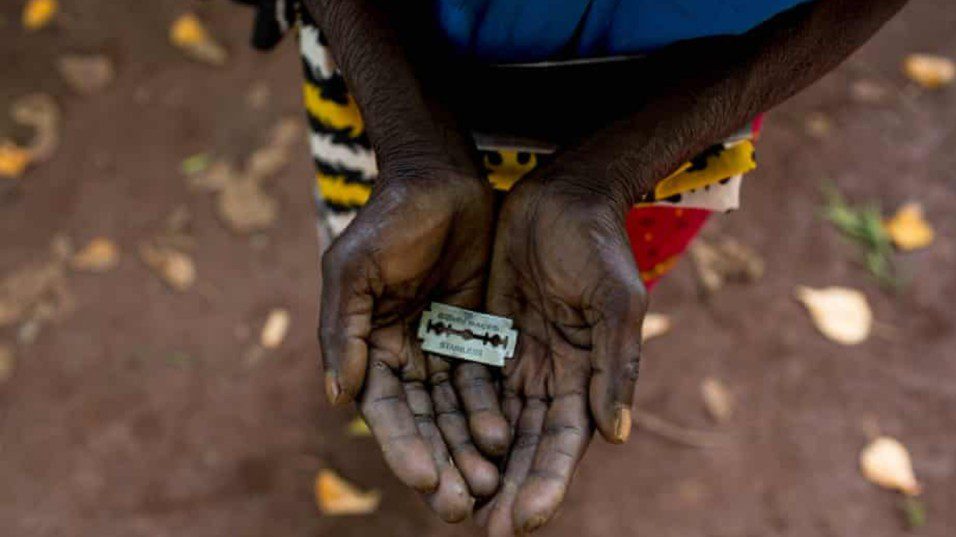
The tragic death of 21-year-old Maseray Sei in Sierra Leone after undergoing female genital mutilation (FGM) has reignited calls from activists and rights groups to outlaw the harmful practice, which remains widespread and rooted in traditional initiation rituals. :contentReference[oaicite:0]{index=0}
Read Full Article →V. The Legal War of Attrition: Regression vs. Resilience
In 2026, the global legal landscape for FGM has shifted from “enacting laws” to “defending them.” While 59 of the 94 countries where FGM is prevalent have codified bans, these laws are facing unprecedented constitutional challenges.
5.1 Case Study: The Gambia’s “Redline”
The most significant legal event of February 2026 is the ongoing Supreme Court deliberation in The Gambia. Following the 2024 parliamentary attempt to repeal the Women’s (Amendment) Act of 2015, pro-FGM advocates have moved their battle to the judiciary.
- The Constitutional Argument: Proponents of the repeal argue that FGM is a protected religious right under Islamic law and a cultural right under the Gambian constitution.
- The Rights-Based Counter: Human rights organizations, including Women in Liberation and Leadership (WILL), have filed amicus briefs asserting that the right to bodily integrity and freedom from torture overrides any cultural or religious claim.
- The August 2025 Catalyst: The case gained international fervor following the tragic death of a one-month-old girl from hemorrhage in the Central River Region. This tragedy served as a “clinical indictment” of the claim that the practice can be safely performed.
5.2 The AU Accountability Framework
To counter this regression, the African Union (AU) launched the AU Accountability Framework for the Elimination of Harmful Practices in late 2025. This framework allows for “Peer Review” mechanisms where member states can hold each other accountable for failing to enforce bans, effectively treating FGM as a cross-border security and health crisis rather than a domestic policy issue.
VI. The Economic Imperative: Why Divestment is a Fiscal Error
The “Funding Cliff” mentioned in the previous section is not just a moral crisis; it is an economic miscalculation. Research published by the WHO and the Muskoka Fund in early 2026 provides a stark financial forecast.
6.1 The $1.6 Billion Annual Healthcare Drain
By the end of 2026, the global cost of treating FGM complications is expected to hit $1.6 billion USD. This includes:
- Emergency Obstetric Care: Management of obstructed labor and postpartum hemorrhage.
- Urological Repairs: Treatment for chronic urinary tract infections and kidney damage.
- Mental Health Infrastructure: Addressing the widespread PTSD and anxiety that limits women’s labor force participation.
MUST READ

How Repressed Emotions Are Ruining Your Life
A compelling look at how unprocessed emotions silently shape behaviour, stress, relationships, and well-being — and what you can do about it.
Read Full Article →6.2 The Tenfold Return on Investment (ROI)
Data shows that for every $1.00 invested in prevention today, the international community saves $10.00 in future healthcare and productivity costs. A targeted investment of $2.8 billion over the next four years could prevent 20 million cases, generating an estimated $28 billion in global economic returns by 2030.
VII. Technology: The Double-Edged Blade of 2026
In 2026, technology has become both a tool for perpetrators and a weapon for protectors.
7.1 Digital Surveillance and “The Underground Blade”
As laws tighten, “cutting season” has moved online. Practitioners use encrypted messaging apps to coordinate “pop-up” cutting events in rural areas, making it difficult for police to intervene. In some regions of Southeast Asia, “Type IV” FGM is marketed on social media as a “hygienic ritual,” bypassing traditional filters through coded language.
7.2 The Rise of mHealth and Protection Apps
Conversely, digital health (mHealth) has revolutionized survivor care.
- “Born Saleema” Digital Pledges: In Sudan, hospitals are using digital registries where parents sign “Saleema Pledges” to keep their daughters uncut. These registries are linked to national health IDs, allowing for automated follow-ups during a child’s first five years.
- The “Kifaya” App: Launched in 2025, this multilingual app provides girls with an “emergency button” that alerts local community-based surveillance teams (CBSTs) if they suspect they are at risk of being cut during school holidays.
VIII. The “Saleema” Model: A Masterclass in Social Norm Change
Research in 2026 has confirmed that the most effective way to end FGM is not to attack the “bad” tradition, but to market a “better” one. The Saleema Initiative remains the gold standard for this.
8.1 From “Deficit” to “Abundance”
Traditional anti-FGM campaigns used “gore and shock” tactics (images of blades and blood). These often backfired, causing communities to retreat into defensive cultural silos.
- The Linguistic Shift: Saleema (Arabic for “whole/intact”) reframes the uncut girl as the “pure” and “God-given” state.
- The Color Palette: By using a specific palette of orange, red, and yellow in clothing and banners, the movement has turned “being uncut” into a visible, fashionable, and proud identity.
8.2 The 2026 “Youth Ambassador” Success
In February 2026, the African Union highlighted the work of Saleema Youth Ambassadors. These survivors-turned-leaders have successfully leveraged TikTok and local radio to reach the “Generation Alpha” demographic, resulting in a 40% increase in girls openly refusing the practice in participating communities.
IX. Conclusion and 2027 Policy Recommendations
The 2026 International Day of Zero Tolerance serves as a warning that progress is not linear. To meet the 2030 goal of total elimination, the global community must adopt the following research-backed strategies:
- Bridge the Funding Gap: Re-categorize FGM prevention from “charity” to “essential health infrastructure” to protect it from political funding cycles.
- Criminalize Medicalization: Enforce strict professional de-licensing for any medical practitioner involved in FGM, as per the 2025 WHO Clinical Guidelines.
- Climate-Resilient Protection: Integrate FGM prevention into humanitarian aid for climate-displaced populations in the Sahel and Horn of Africa.
- Survivor-Led Budgeting: Ensure that at least 30% of global FGM funding is directly managed by survivor-led grassroots organizations.
The 4.5 million girls at risk this year do not have the luxury of waiting for the next funding cycle. The data is clear: we have the tools, the technology, and the community models to end FGM—we only lack the consistent political and financial will to finish the job.
References
- UNICEF Data Portal (Feb 2026 Update): “The Cumulative Burden of 235 Million.”
- WHO/FIGO Joint Guidelines (2025): “Clinical Ethics and the Zero Tolerance for Medicalized FGM.”
- World Bank Economic Report (2026): “The Actuarial Reality of Harmful Practices.”
- African Union Policy Brief: “The Saleema Model and Cross-Border Accountability.”
MUST READ

Stop Calling It Tradition When It’s Just Control
A bold, thought-provoking critique of harmful social norms disguised as “tradition” — reclaim autonomy and challenge oppressive narratives.
Read Full Article →