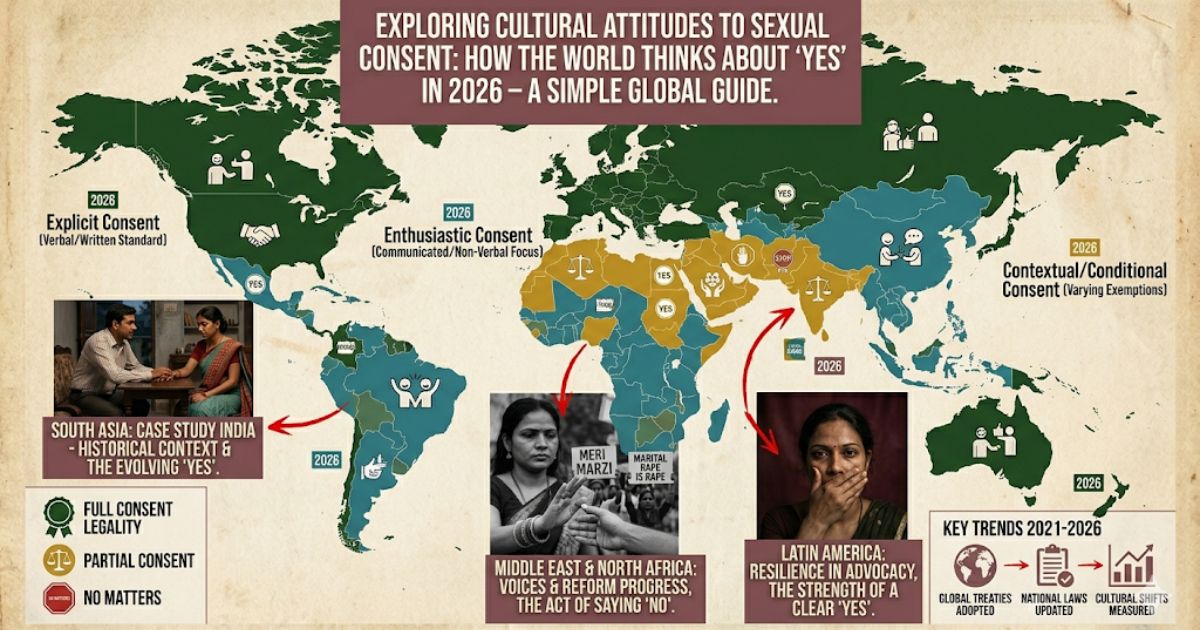
Sexual consent means a clear, free, and ongoing “yes” from everyone involved in any intimate act. It is not just one word at the start. It can change at any time, even in a long marriage or relationship. But around the world, people’s ideas about consent are shaped by culture, history, religion, family rules, and modern changes like social media. In 2026, these attitudes are not the same everywhere. Some places treat consent as a basic right. Others still see it as something tied to marriage, duty, or tradition.
What Consent Really Means
Consent is not complicated, but culture can make it feel that way. In simple terms, consent is when two or more adults freely agree to sex or any touch without pressure, fear, or tricks. It must be enthusiastic – not just silence or “I guess.” It must be ongoing. You can say yes at first and change your mind later. It is never automatic because of a ring, a date, or past times together.
Why do cultural attitudes matter so much? Because they decide if people respect a “no.” In some cultures, old ideas say a wife’s body belongs to her husband after marriage. In others, young people learn from school that consent is a skill everyone needs. A 2026 United Nations report shows that in over half of all countries (54 percent), rape laws still do not use consent as the main test. This means the law sometimes ignores a woman’s clear “no” if she is married or did not fight back. These laws reflect deeper cultural beliefs.
Attitudes also affect reporting. In many places, victims stay silent because family or community says “it is private” or “you asked for it by dressing that way.” Studies from the World Values Survey (recent waves up to 2025) show huge differences. In some countries, up to 85 percent of people think violence against a partner is okay in certain cases. In others, almost no one does. Understanding these attitudes helps us see why change is slow in some spots and fast in others.
History of Cultural Attitudes
Long ago, most cultures saw women as property. Ancient laws from Europe, Asia, Africa, and the Middle East treated marriage as a contract that gave men rights over their wives’ bodies. Sex was a “duty.” A wife could not legally say no. This idea came from religious texts, tribal customs, and old rules like English common law. For centuries, courts said a husband could not rape his wife because the wedding vows meant forever consent.
Colonial powers spread these views. In Africa and Asia, local traditions mixed with European laws. In many places, religion reinforced it. Some interpretations of Islam, Christianity, Hinduism, and other faiths stressed obedience in marriage. Women were taught to please husbands to keep family honor.
Change started in the 1900s. Women’s rights movements in Europe and North America pushed for new laws. By the 1970s, feminists said consent must be personal, not tied to marriage. Countries like Sweden (1965) and Canada (1983) led the way. The #MeToo movement in 2017 sped things up globally. It showed that silence and shame hid the problem everywhere.
But history lingers. In 2026, old attitudes still shape daily life in villages, families, and even cities. Young people may learn modern ideas at school but hear traditional ones at home. This creates a mix – what experts call “cultural clash.”
Western Cultures: Europe and North America
In Europe and North America, attitudes have shifted the most. Most people now see consent as active and clear. Schools teach it from a young age. Laws require “yes means yes” in many places. For example, the UK and Germany treat marital rape exactly like any other rape. Courts say marriage gives no special rights.
Surveys show younger generations (Gen Z) are most supportive. They learn from apps, social media, and education programs. A 2025 study on U.S. university students found most reject old rape myths like “she was asking for it.” But gaps remain. Some men still expect sex after a date or in long relationships. Older generations sometimes rely on “non-verbal cues” like body language instead of words.
Media plays a big role. TV shows, movies, and TikTok now show consent talks as normal and sexy. #MeToo started in the U.S. and spread fast here. It led to more reports and training for workplaces and colleges. Still, problems exist. In some conservative Christian or rural communities, ideas of “wifely duty” survive quietly.
Overall, Western cultures link consent to individual freedom and equality. This makes attitudes more progressive than in many other regions. But even here, culture is not perfect – power imbalances in dating or marriage can blur lines.
Learn more about global marital rape laws in our related guide – but in real life, check UN Women reports for latest facts.
Asia: Tradition Meets Modern Life
Asia shows huge variety. In East Asia (Japan, South Korea, China), rapid city growth and education have changed views. A 2025 study across three East Asian countries found that higher knowledge of consent leads to better intentions to ask clearly. Young people in Seoul or Tokyo often say consent is important. But family pressure and “saving face” make open talks hard. Silence can mean yes in some old customs.
In South Asia (India, Pakistan, Bangladesh), attitudes are more mixed. Many rural areas still tie sex to marriage and duty. A court case or news story about marital rape often sparks debate. Some families say a wife cannot refuse because of religious or cultural honor. Urban youth, influenced by Bollywood and global apps, push back. They demand education on consent.
Southeast Asia (Thailand, Philippines, Indonesia) has made legal steps. Thailand criminalized marital rape years ago. But culture still values harmony over individual “no.” In Muslim-majority areas like Indonesia, religious leaders sometimes teach obedience in marriage.
China’s one-child policy era and now its modern economy have created fast change among young people. Yet state control and family expectations limit open discussion. Overall, Asia’s attitudes are moving toward consent, but tradition slows it in villages and conservative homes. Education and social media are the biggest drivers.

A critical look at how outdated beliefs continue to blur the meaning of consent within marriage.
Read More →Africa: Community, Custom, and Change
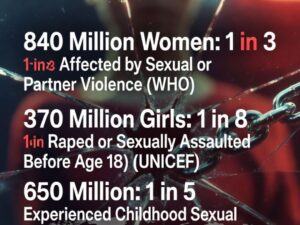
Africa has the widest range. In South Africa and Rwanda, strong laws and campaigns have shifted attitudes. People talk openly about consent in cities. But in many sub-Saharan countries, customary (tribal) laws still treat marriage as automatic consent. A 2024 UNICEF report said over 79 million girls and women in the region faced sexual violence as children – often linked to attitudes that downplay consent.
In West Africa (Nigeria, Mali), some communities see sex as a husband’s right. Women who say no risk blame or divorce. Education levels matter hugely. A recent study across 22 countries found only 45 percent of women feel sexual autonomy. In Uganda and Gabon, over 70 percent do – thanks to better laws and media. In Mali, it is just 15 percent.
Religion and poverty shape views. In Christian or Muslim areas, some teachings stress submission. But youth movements and radio campaigns are teaching consent as respect. Urban vs rural divide is big: cities adopt global ideas faster. Overall, African attitudes are changing where education and women’s groups push hard, but custom remains strong in many places.
Middle East: Honor, Religion, and Slow Progress
In the Middle East, cultural attitudes often link consent to family honor and religion. Many countries still do not fully criminalize marital rape. A 2025 Equality Now report on 22 Arab states showed inconsistent laws and high stigma. People may see forced sex in marriage as private, not crime.
In Iran, a 2025 study found people blame married victims more than dating victims and punish husbands less. Marriage changes how people view consent – it feels less like a choice. Similar patterns exist in Jordan, Syria, and Saudi Arabia. Tradition says a good wife obeys.
Yet change happens. Young people on social media (even with limits) learn global ideas. Tunisia and some Gulf states have updated laws after public pressure. Women’s groups quietly teach consent in safe spaces. Attitudes among youth are shifting toward personal choice, but family and religious leaders still hold strong influence. Honor killings or shame around reporting make open consent talks rare.
Latin America: Passion, Protest, and Progress
Latin America has seen big cultural shifts through protests. Countries like Argentina, Chile, and Mexico have strong feminist movements (“Ni Una Menos”). These changed attitudes fast. Many now define rape by lack of consent, not just violence.
Catholic roots once stressed marriage duty, but modern laws and schools teach otherwise. Brazil and Peru added consent rules in the 2010s. Young people in cities say consent is cool and necessary. Media and telenovelas now show healthy talks.
Still, machismo (strong male ideas) lingers in some rural or traditional families. Men may expect sex as proof of love. Poverty and gangs add pressure. But overall, Latin America moves quicker than some regions because of loud activism and legal wins.
What Shapes Cultural Attitudes
Several big things decide how people think about consent:
- Religion and Tradition: Many faiths teach roles in marriage. Some stress obedience. Others now reinterpret for equality. Customary laws in Africa and Asia often override modern rules.
- Education and Media: Schools with comprehensive sexuality education (UNESCO-backed) improve attitudes everywhere. TV, TikTok, and Netflix show consent as normal. Radio in Africa reaches villages.
- Gender Roles: In many cultures, men are “hunters” and women “gatekeepers.” This makes men less likely to ask clearly and women less likely to say no loudly. World Values Survey data shows this link to higher acceptance of violence in unequal societies.
- Economy and Urban Life: Richer, city people change faster. Education and jobs give women power to say no.
- Laws: Good laws shape culture over time. Bad laws or weak enforcement keep old attitudes alive.
A 2025 global study on IPV (intimate partner violence) acceptance found big drops over time, but women in some regions still accept it more due to cultural pressure.
#MeToo and Global Shifts
#MeToo started in the West but went global. It reached 85+ countries. In the U.S. and Europe, it cut demand for old gender signals (like high heels in one study) and boosted reporting. In Asia and Latin America, local versions exploded on social media. China and Sweden saw slower but real talks.
It challenged silence. More people now say consent matters. But backlash happened too – some called it “too Western” or “anti-family.” Still, it made consent a household word in 2026.
Challenges and Myths
Common myths slow change:
- “Marriage means yes forever.”
- “No means try harder.”
- “She did not fight, so she wanted it.”
- “Real men take what they want.”
These myths appear in every region but stronger where education is low. Shame, fear of divorce, and community pressure keep victims quiet. Men sometimes fear “false accusations” more than listening.
Positive Changes Today
Hope is real. More countries train police on consent. Schools add lessons. Men’s groups teach healthy masculinity. Apps help couples talk. UN Women and local NGOs push data-driven change. In 2026, attitudes improve fastest where education, media, and laws work together.
Conclusion
Cultural attitudes to consent are not fixed. They evolve with people, education, and courage. In 2026, the world is not equal yet – but progress is clear in laws, youth voices, and global pressure. Every culture can choose respect over control. Consent is not Western or modern; it is human. Families, schools, and leaders must teach it early. When everyone understands “yes” is a choice every time, relationships become safer and happier.
Knowledge changes culture. Share this, talk openly, and support education. A world where consent is normal everywhere is possible.
FAQ
Q: Is consent the same in every culture?
No. Some see it as duty; others as personal choice.
Q: Do laws change attitudes or do attitudes change laws?
Both. Good laws help shift culture over time.
Q: What can I do in my culture?
Teach kids consent. Support survivors. Challenge myths in family talks.
Q: Has #MeToo helped everywhere?
It sparked talks globally, but change is uneven.
Q: Where can I learn more?
Check UN Women reports or local consent education programs.
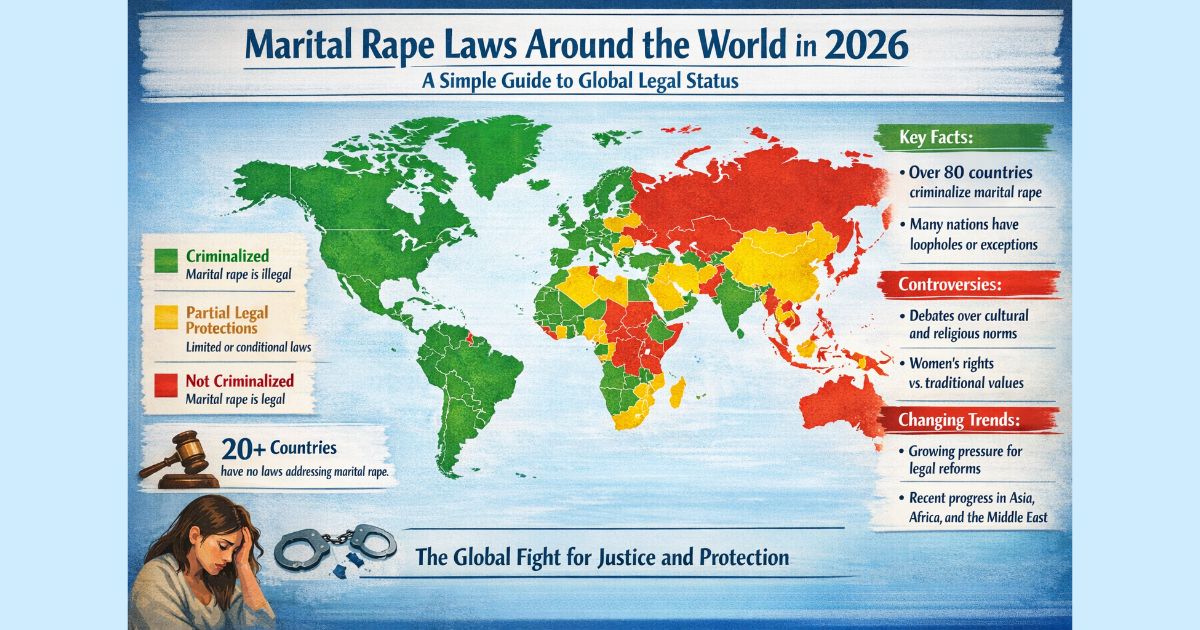
A global breakdown of how different countries recognize—or fail to recognize—marital rape in modern legal systems.
Read Full Article →