In the quiet corners of every classroom, every family dinner table, and every playground, a second education unfolds. Philip Jackson first named it in 1968: the hidden curriculum—the unstated lessons that teach children not just facts, but their place in the social order. It whispers through teacher expectations, peer dynamics, textbook illustrations, and the subtle rewards handed out for “good behavior.” For boys, those lessons often include competition, risk-taking, and claiming space. For girls, the script has long been different: cooperate, accommodate, prioritize harmony, and stay likable.
This hidden curriculum does not vanish at graduation. It follows women into boardrooms, courtrooms, political campaigns, and even their own living rooms. It teaches them to wield influence indirectly, to hesitate before claiming authority, and to trade respect for approval. The consequences are measurable and persistent: women still negotiate salaries less aggressively, face backlash when they assert leadership, and battle imposter feelings that men encounter far less often. Yet the curriculum’s most damaging feature is its invisibility. Most women never realize they were never taught the rules of power, only the rules of being palatable within someone else’s power structure.
This is not an indictment of men or a claim that women are inherently deficient. It is a map of cultural transmission. Empirical patterns in socialization, leadership research, and organizational data show consistent gaps rooted in what societies have historically rewarded and punished. For instance, recent studies continue to document how schools perpetuate gender differences through subtle mechanisms like portraying men as active agents in textbooks while women appear in supportive roles. Teachers may unconsciously call on boys for challenging questions and girls for tasks emphasizing neatness or cooperation. These early experiences shape long-term behaviors, from career choices to negotiation styles.
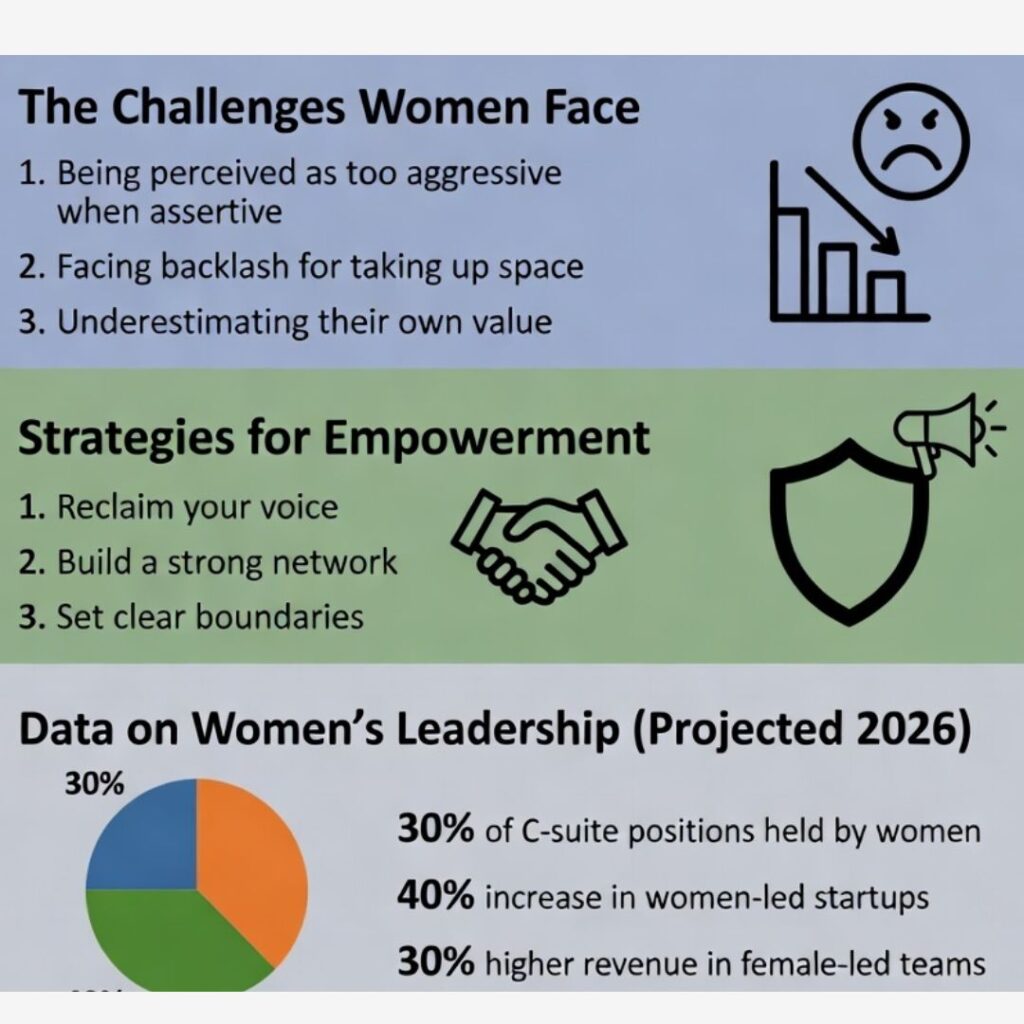
As of March 2026, the landscape remains sobering. Women hold only about 31% of senior leadership roles globally according to LinkedIn’s Economic Graph data, with U.S. figures showing a decline from 35% in 2024 to 31% in recent reports. In the Fortune 500, women CEOs hover around 10–11%, a record high yet still representing profound underrepresentation. At the current pace, parity could take decades. These statistics underscore systemic barriers, but they also highlight opportunities for individual agency. By understanding and countering the hidden curriculum, women can accelerate change from within.
The good news is that once the hidden lessons are named, they can be unlearned and replaced. This comprehensive pillar resource serves as that replacement syllabus. It draws on decades of sociological studies, leadership literature (including updated 2025–2026 insights), and the trajectories of women who cracked the code. We’ll explore the three pillars most women were never taught that is influence, authority, and respect, and thereby provide concrete, evidence-based strategies to master them. Along the way, we incorporate real-world statistics, case studies, tables, and actionable tools to make this a go-to guide for women navigating power dynamics in 2026 and beyond.
Table of Contents
Part 1: Decoding the Hidden Curriculum – How Societies Teach Power Differently
The hidden curriculum operates through three primary channels: structure, process, and content. In educational settings, textbooks still portray men as active agents and women as supportive figures far more often than the reverse. Teachers unconsciously call on boys more frequently for complex questions and girls for neatness or cooperation. Peer groups enforce norms such as boys who lead are “natural leaders”; girls who do the same are “bossy.” These patterns reproduce themselves across cultures and generations.
Recent research reinforces this persistence. A 2025 study on first-year engineering education uncovered a “hidden curriculum” of gender bias through banter and cultural barriers that deter women from persisting in the field. Another 2023–2025 analysis in English schools showed schools producing rigid gender binaries presented as natural and fixed, stifling critical reflection on norms. Even in 2026 publications, discussions of hidden curricula in L2 classrooms and teen dating violence prevention highlight how everyday norms, interactions, and climate continue to regulate gender expectations.
Feminist sociologists have documented this for decades. Girls learn early that their value lies in relational skills rather than instrumental power. They internalize that direct confrontation risks social ostracism. Boys learn that ambition is rewarded and that claiming credit is expected. The result is not biology but accumulated reinforcement. Studies on gender socialization in schools show that these unspoken lessons shape occupational choices, negotiation behavior, and leadership aspirations long before any woman enters the workforce.
The curriculum also evolves but slowly. While some gaps narrow (more women in certain C-suite roles in specific sectors), underlying transmission mechanisms remain. Imposter syndrome, for instance, continues to correlate strongly with gender. A 2024 meta-analysis of over 115 studies and 40,000+ participants found women score higher on imposter measures with a moderate effect size (Cohen’s d = 0.27), consistent across fields and regions, though smaller in Asia than in Europe/North America. Women report doubting their competence even when objective metrics say otherwise, while men overstate theirs with little penalty. This is not a personal failing; it is the long echo of lessons that taught girls their worth must be constantly proven and never assumed.
The curriculum intersects with other identities. Working-class women, women of color, and LGBTQ+ women receive compounded versions; additional layers warning them that authority is doubly risky. For instance, intersectional biases amplify imposter experiences in STEM for Black women and others. Yet the core omission is universal: few women are explicitly taught that power is neutral, learnable, and separable from likability. That omission is the entire problem.
To illustrate, here is an expanded table summarizing key gender differences in the hidden curriculum, updated with recent insights:
| Aspect | Boys’ Hidden Lessons | Girls’ Hidden Lessons | Long-Term Impact (2026 Insights) |
|---|---|---|---|
| Classroom Interaction | Encouraged to speak up, debate, and lead discussions. | Praised for cooperation, listening, and supporting others. | Boys develop assertiveness; girls often learn deference. This pattern continues into higher education through participation gaps and discussion biases. |
| Textbook Representation | Often portrayed in active roles such as inventors, leaders, and explorers. | Frequently shown in passive or supportive roles like helpers, caregivers, or family figures. | Reinforces male agency in knowledge production while limiting girls’ identification with STEM and leadership pathways. |
| Peer Dynamics | Competition rewarded and risk-taking normalized. | Harmony prioritized; ambition sometimes labeled as “bossy”. | Boys claim social space while girls accommodate. Over time this can lead to narrower professional networks for women. |
| Teacher Feedback | Challenged on ideas and analytical thinking. | Evaluated more frequently on behavior, neatness, and compliance. | Boys build resilience through intellectual challenge, while girls may internalize perfectionism—linked to imposter syndrome (effect size d ≈ 0.27). |
| Modern Additions (2025+) | Male-dominated fields often reinforce informal “banter cultures”. | Rigid gender norms and expectations continue shaping behavior. | These dynamics can discourage women entering engineering and technical fields while also regulating LGBTQ+ identity expression. |
This table highlights how early patterns compound, creating systemic disparities that manifest in 2026 leadership statistics.
Part 2: Influence – The Invisible Lever Women Already Hold but Rarely Pull Strategically
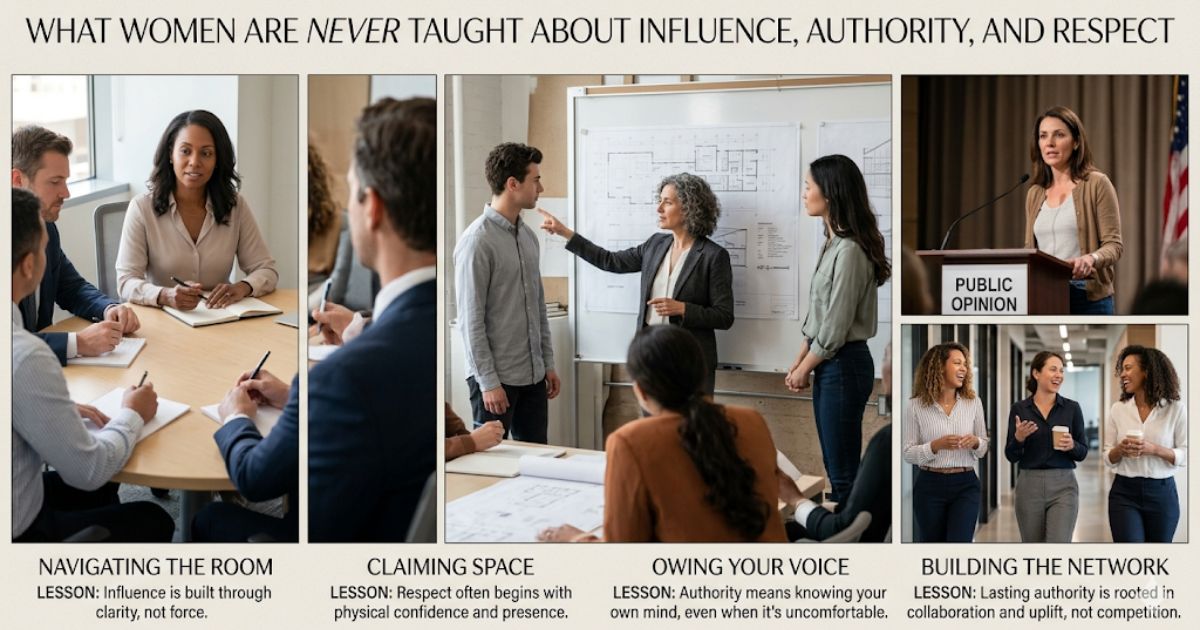
Influence is the ability to shape outcomes without formal title. It travels through relationships, information control, framing, and timing. Women often excel at the relational side like building trust, reading rooms, remembering details, yet the hidden curriculum frames these strengths as “soft” or secondary. Boys are taught to use influence transactionally: alliances for advancement, networks for leverage. Girls are taught to use it protectively: keep everyone happy, avoid rocking the boat.
Research on gender and power repeatedly shows women under-utilize strategic influence. They hesitate to ask for sponsorship, delay self-promotion, and avoid “office politics” as if it were dirty rather than neutral organizational reality. The result? Ideas are stolen, credit is reassigned, and opportunities flow elsewhere. Studies find women negotiate less for resources, promotions, and visibility not due to lack of skill, but because the hidden curriculum taught them that asking signals selfishness.
The antidote begins with reframing. Influence is not manipulation; it is pattern recognition plus deliberate action. Women who master it treat networks as infrastructure, not social clubs. They map informal power structures: who controls information, who has veto power, who can amplify messages. They practice “strategic visibility”: sharing wins in ways that benefit the group while securing personal capital. They learn timing: planting ideas early so others adopt them as their own, or waiting until a crisis to demonstrate calm competence.
Real influence requires comfort with discomfort. The hidden curriculum punishes women for seeming calculating. Successful women learn to ignore that punishment. They build “currency accounts” such as favors given, credibility banked, relationships maintained so that withdrawals feel natural rather than transactional. They stop apologizing for ambition. They stop saying “I just got lucky” when describing achievements.
Sub-strategies to build influence:
- Network Intentionally: Focus on diverse, cross-level connections. Women’s networks are often narrower, limiting key influencers.
- Leverage Storytelling: Frame proposals as narratives aligned with organizational goals, making influence collaborative.
- Practice Reciprocity: Give value first—insights, introductions—to create callable obligations.
- Monitor Feedback Loops: Regularly seek input on perceived influence, adjusting to avoid backlash.
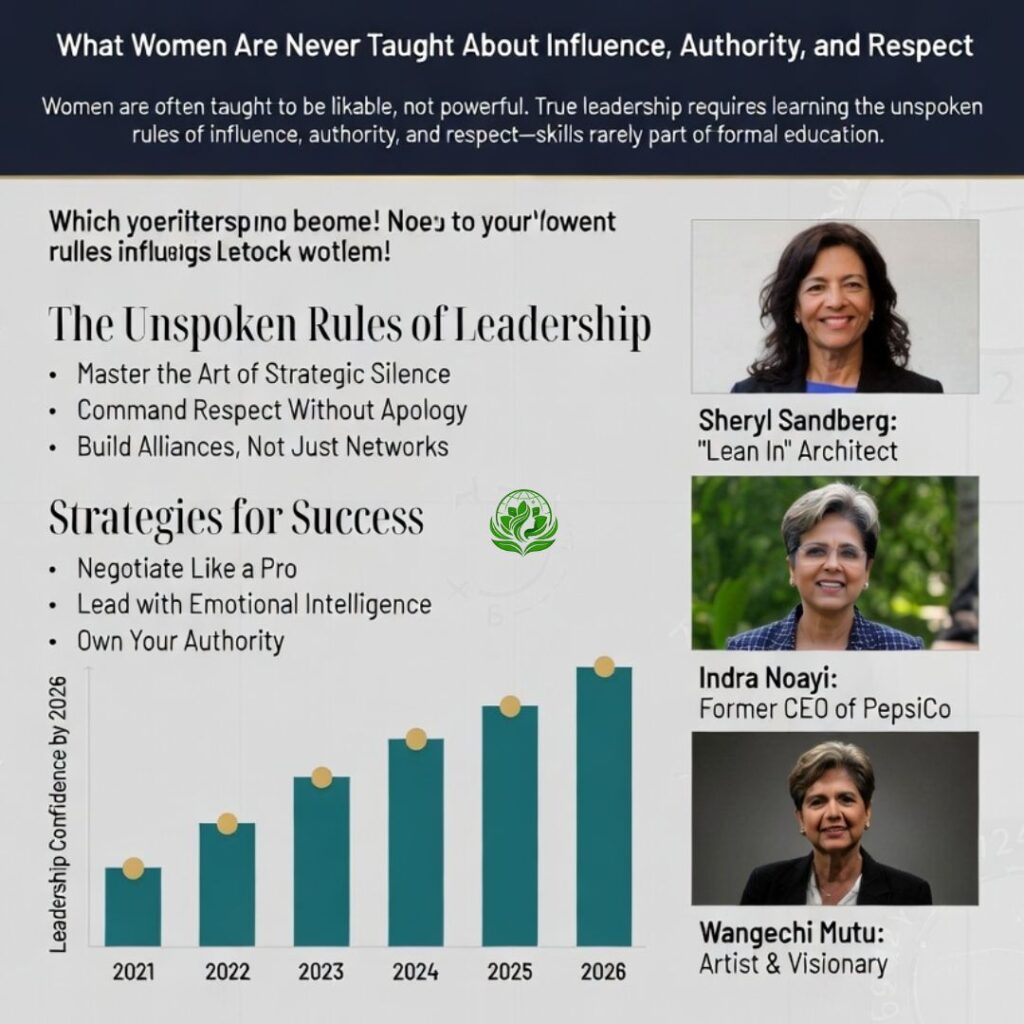
Case example: Indra Nooyi used strategic influence at PepsiCo to reposition toward healthier products by mapping stakeholders and building alliances, navigating cultural expectations as an Indian-American woman.
👉 Do not miss reading the inspiring story of Indra Nooyi Here: The Game-Changer Who Led PepsiCo with Purpose and Innovation
Part 3: Authority – How to Occupy Space When the World Keeps Shrinking It
Authority is the legitimate right to make decisions and expect compliance. The hidden curriculum teaches women that authority must be earned through perfection and granted by others, while men learn it can be claimed through confidence and position. This creates the persistent “authority gap.” Women are routinely interrupted more often, have their expertise questioned even with superior credentials, and are addressed with first names or casual terms while men receive titles. The gap persists across industries and levels.
Body language, vocal tone, and physical presence form the unspoken grammar of authority. Women are socialized early to shrink themselves like crossing legs tightly, using upward inflection (making statements sound like questions), adding qualifiers (“I think,” “sorry to interrupt,” “just wondering”). Men are socialized to expand: broader stances, lower vocal registers, direct eye contact. Correcting these patterns requires deliberate, repeated practice. Claim the physical center of the room during meetings. Lower your speaking pitch slightly for gravitas. Eliminate filler words and hedging phrases. Deliver declarative statements without trailing off. These adjustments are not about mimicking masculinity they are about signaling that your words deserve weight and attention.
Psychological barriers amplify the physical ones. Imposter syndrome plays a major role here. A 2024 meta-analysis of 115 studies involving over 40,000 participants found that women consistently score higher on imposter phenomenon measures, with a moderate effect size (Cohen’s d = 0.27). This difference holds across fields, though it is smaller in Asia compared to Europe and North America, and varies by measurement scale (stronger with the Clance scale). Women doubt their competence even when data proves otherwise, while men tend to overestimate theirs with minimal social cost. This internalized doubt makes asserting authority feel risky like potential exposure as a fraud.
External pressures compound the issue through the backlash effect. Role congruity theory explains why: leadership is stereotyped as masculine, so assertive women violate expectations and face penalties. They are labeled “abrasive,” “bossy,” or “difficult,” while identical behavior in men reads as “decisive” or “strong.” The hidden curriculum never equipped women to navigate this double bind: be competent but not too assertive, warm but not weak. The solution lies in pairing authority with clear purpose and evidence. Ground decisions in data, organizational strategy, and collective benefit—backlash loses fuel when the focus shifts from personality to results.
Authority also requires comfortable ownership of mistakes. The curriculum frames errors as catastrophic evidence of unworthiness, especially for girls taught to seek approval through flawlessness. High-performing leaders treat mistakes as valuable data points. They debrief publicly when appropriate, extract clear lessons, share those insights, and move forward decisively. This transparency builds trust far faster than unattainable perfection ever could.
Practical strategies to build and project authority:
- Vocal Training Drills — Record yourself in mock meetings or presentations. Practice lowering your pitch range slightly, slowing your pace, and cutting uptalk. Listen back weekly to track progress until it feels natural.
- Physical Presence Habits — Arrive early to claim central seating. Use open posture (uncrossed arms, feet planted), maintain steady eye contact, and gesture purposefully to occupy visual space.
- Interruption Management — Use the “pause and pivot” technique: pause briefly, offer a calm smile if needed, then continue exactly where you left off with “As I was saying…” This reclaims the floor without escalation.
- Sponsorship Targeting — Seek senior mentors or sponsors who model backlash-resistant authority. Observe how they handle pushback and emulate the mechanics.
Table summarizing imposter syndrome gender differences (based on 2024 meta-analysis):
| Metric | Women | Men | Effect Size (Cohen’s d) |
|---|---|---|---|
| Average Score | Higher | Lower | 0.27 (moderate) |
| Regional Variation | Stronger in West | Weaker in Asia | Varies regionally |
| Scale Sensitivity | Higher on Clance scale | Baseline | Consistent across fields |
Part 4: Respect – The Currency That Cannot Be Bought with Likability Alone
Respect and likability are frequently conflated for women by the hidden curriculum: be agreeable, accommodating, and warm, and respect will naturally follow. Decades of research demonstrate the opposite. Likability functions as a tax women pay that men rarely encounter. High-competence women who appear “cold” or direct face hostility and penalties; those who balance competence with warmth earn respect. Men displaying identical high competence without extra warmth rarely suffer backlash.
Respect is earned through three pillars the curriculum rarely teaches deliberately: consistent demonstration of competence over time, firm boundary enforcement, and strategic generosity. Competence must be visible and documented such as track achievements in concrete, outcome-oriented language (e.g., “Increased team revenue 28% through X initiative” rather than “Worked hard on a project”). Communicate these wins regularly without apology.
Boundary enforcement signals self-respect and commands respect in return. Decline unreasonable requests with calm finality (“I won’t be able to take that on right now”). Redirect interruptions professionally. Correct misattributions of credit firmly but factually (“Actually, that idea originated from my analysis last quarter”). No lengthy explanations needed, boundaries are complete sentences.
Strategic generosity which means publicly amplifying others (especially other women), mentoring strategically, sharing credit intentionally that builds a network of allies who defend your reputation when challenged. This creates reciprocity: people invest in protecting those who invest in them.
The most powerful lever is consistency. When your presence reliably adds value through insight, decisiveness, reliability, people stop testing limits. Respect becomes a compounding reputation asset, like interest in a high-yield account. Protect it ruthlessly by addressing disrespect promptly and proportionally.
Navigating the likability double bind requires intentional balance: pair decisiveness with empathy where possible (e.g., “I appreciate your perspective and here’s why we’re moving forward with this approach”). Publicly credit and elevate other women to expand the halo effect.
Part 5: The Real-World Price Tag – What Ignorance of This Curriculum Costs
The costs manifest personally and systemically. On the personal level, women leave significant money on the table through less aggressive negotiation rooted in socialization against seeming “selfish.” Recent data shows the U.S. gender pay gap widened again: women earned about 80.9–83.6% of men’s earnings in full-time roles in 2024–2025 data (with projections holding steady into 2026). The gap doubles over a 30-year career in some analyses, costing hundreds of thousands in lifetime earnings and retirement security. Slower promotions from sponsorship and visibility gaps compound this. Higher burnout rates result from carrying disproportionate relational and emotional labor.
Organizationally, companies lose diverse perspectives, innovation, and performance when women self-select out of high-influence roles or leave entirely. Firms with higher female leadership outperform peers on revenue growth, decision quality, and resilience.
Societally, the hidden curriculum wastes massive talent pools. Countries and companies with greater female leadership show stronger outcomes in health, education, economic stability, and crisis management. Yet pipelines continue leaking: women hold roughly 44% of the global workforce but only 31% of leadership positions (per LinkedIn 2026 data), with U.S. senior leadership dipping to 31% in recent reports. Fortune 500 women CEOs reached a record 55 in 2025 (11%), but global Fortune Global 500 figures lag at around 6–7%. Intersectional impacts hit hardest: women of color hold far fewer C-suite roles (~7–8% in many datasets), facing compounded biases.
These numbers reveal not personal shortcomings but a curriculum that systematically under-prepares half the population for power.
Part 6: Women Who Rewrote the Curriculum – Case Studies in Real-Time Mastery
The women profiled here did not merely climb ladders built by others: they questioned the ladders, redesigned them, and sometimes built entirely new structures. Each confronted versions of the hidden curriculum: the unspoken rules that demand women prove competence endlessly, balance warmth with strength without tipping into “unlikeable,” navigate backlash for ambition, and often carry invisible relational labor. Yet through deliberate mastery of influence, authority, and respect, they rewrote personal and institutional scripts. Their stories, drawn from recent trajectories up to 2026, illustrate that cracking the code is possible, and replicable.
1. Mary Barra – Sustained Authority in Transformation
As CEO of General Motors since 2014, Mary Barra has led one of the most dramatic industrial pivots in modern history: steering the century-old automaker toward an all-electric future amid massive financial and cultural resistance. Ranked as the highest-placed woman-led company on the Fortune 500 (No. 18 in 2025), Barra exemplifies understated authority. She claims space without bombast—focusing on data-driven decisions, stakeholder alignment, and long-term vision rather than performative charisma. When criticized for slow progress or legacy costs, she responds with results: GM’s EV lineup expansion and profitability in key segments. Her approach neutralizes backlash by rooting authority in collective benefit shareholders, employees, and sustainability goals. Barra’s mastery shows how consistent, evidence-based leadership compounds respect over time, turning doubters into believers without compromising competence for likability.
2. Jane Fraser – Strategic Influence in Finance
Jane Fraser, CEO of Citigroup since 2021, became the first woman to lead a major U.S. Wall Street bank. In a male-dominated industry notorious for aggressive cultures, Fraser wields influence through coalition-building and reframing. She mapped informal power networks early, forging alliances across divisions to execute a massive restructuring: shedding non-core businesses and focusing on high-return areas. Her style blends relational strengths (trust-building, listening) with transactional savvy (clear accountability, tough calls). Despite scrutiny over performance metrics, Fraser’s persistence demonstrates how women can use influence strategically without apology. By 2026, Citigroup’s turnaround progress highlights her ability to plant ideas, secure buy-in, and deliver outcomes—proving influence is infrastructure, not just rapport.
3. Lisa Su – Technical Authority and Quiet Confidence
Lisa Su, CEO of Advanced Micro Devices (AMD) since 2014, transformed a struggling chipmaker into a powerhouse rivaling Intel and Nvidia. Featured prominently in 2026 “Most Admired Companies” lists, Su’s authority stems from deep technical expertise paired with decisive vision. She claims space in rooms full of engineers and investors by grounding assertions in data and physics eliminating hedging through preparation. Facing early skepticism as a woman in semiconductors, Su owned mistakes (early product delays) as learning data, debriefed transparently, and accelerated forward. Her respect accrues from predictable value addition: AMD’s market share gains and innovation pipeline. Su rewrites the curriculum by separating authority from gender performance: her competence speaks louder than any need to “soften” edges.
4. Sanae Takaichi – Breaking Political Barriers
In a landmark 2025 shift, Sanae Takaichi became Japan’s first female prime minister, leading the world’s third-largest economy. Rising amid conservative political norms that long sidelined women, Takaichi mastered influence through patient alliance-building and strategic visibility. She navigated factional politics by framing policies around national stability and economic resilience, earning respect through results rather than confrontation. Her ascent counters the hidden curriculum’s warning that ambition risks ostracism proving calculated risk-taking, when tied to service, can shatter ceilings. By 2026, her leadership tests how women can wield authority in rigid systems without conforming fully to masculine scripts.
5. Reshma Saujani – Redefining Power Through Advocacy
Founder of Girls Who Code and Moms First, Reshma Saujani has influenced millions by naming the hidden curriculum explicitly. Her work reframes power as service—pushing systemic changes in STEM access and maternal support. Saujani builds influence through storytelling and coalition: amplifying underrepresented voices, securing funding, and shifting narratives around ambition. Honored in TIME’s 2026 Women of the Year, she demonstrates strategic generosity—mentoring, platform-sharing—while enforcing boundaries against tokenism. Her trajectory shows respect compounds when authenticity meets action.
Additional Profiles of Emerging Mastery
- Kecia Steelman (CEO, Ulta Beauty): Promoted from COO, Steelman balances retail innovation with inclusive leadership, navigating consumer shifts while elevating women internally.
- Gunjan Kedia (CEO, U.S. Bancorp): As a woman of color in banking, Kedia uses data-driven authority to drive growth, rewriting scripts for intersectional barriers.
- Safeena Husain (Founder, Educate Girls): Scaling education for millions in India, Husain combines grassroots influence with policy advocacy proving relational strengths scale globally.
These women share traits: they map power structures, practice discomfort (claiming credit, enforcing boundaries), anchor authority in purpose, and build reciprocity through generosity. None waited for permission, they studied the unwritten rules, then authored better ones. Their examples offer blueprints: mastery is learnable, not innate. By emulating their mechanics like strategic visibility, evidence-based assertion, consistent value delivery any woman can rewrite her curriculum.
This section stands as inspiration and proof: the hidden curriculum is powerful, but not unbreakable. The women who master it don’t become “like men” they become amplified versions of themselves, reshaping systems in the process.
Part 7: Your Self-Taught Curriculum – 12-Module Roadmap with Implementation Tools
The hidden curriculum thrives in silence and autopilot behaviors. Breaking it requires deliberate, structured replacement habits. Sally Helgesen and Marshall Goldsmith’s How Women Rise (2018, with enduring relevance in 2026) identifies 12 specific habits that frequently hold women back as they advance, habits often rooted in early socialization rewards for cooperation, perfection, and humility. These patterns, helpful at entry or mid-levels, become barriers at senior levels where strategic visibility, leverage, and decisiveness matter more.
This roadmap translates each habit into a monthly module, complete with diagnostic questions, actionable steps, tracking tools, and accountability mechanisms. Implement one habit per month for a full-year transformation. Use a dedicated journal or digital tracker (e.g., Notion template, Excel sheet) to log weekly progress, reflections, and outcomes. Pair with an accountability partner ideally another woman navigating similar dynamics for bi-weekly check-ins.
Month 1: Reluctance to Claim Your Achievements
Habit: Downplaying successes, using minimizing language, or attributing wins to luck/team.
Diagnostic: Do you often say “It was nothing” or “The team did it” when praised?
Steps:
- Create a “Wins Vault” daily note 1–3 contributions with quantifiable impact (e.g., “Led Q1 initiative saving $150K”).
- Practice claiming: In meetings/emails, use “I” statements (“I developed the strategy that increased engagement 22%“).
- Weekly: Share one win publicly (team Slack, manager update).
Tracking: Rate visibility comfort 1–10 weekly; aim for +2 points/month.
Month 2: Expecting Others to Spontaneously Notice and Reward Contributions
Habit: Believing hard work speaks for itself, leading to overlooked promotions.
Diagnostic: Have you been surprised by others getting credit/recognition you earned?
Steps:
- Build proactive updates: Monthly “impact summary” to manager/sponsor (bullet points on outcomes).
- Schedule visibility rituals: 15-minute quarterly self-review with boss.
- Ask for feedback explicitly: “What results from my work stood out most this quarter?”
Tracking: Log instances of self-initiated recognition; target 3+ per month.
Month 3: Overvaluing Expertise
Habit: Prioritizing mastery/perfection over delegation and vision.
Diagnostic: Do you hesitate to hand off tasks fearing they won’t be “done right”?
Steps:
- Delegate one high-visibility task weekly; coach rather than redo.
- Shift focus: Spend 20% of time on strategic thinking (reading industry trends, networking).
- Reframe: Expertise enables leadership—vision scales it.
Tracking: Measure delegation comfort and time freed for big-picture work.
Month 4: Building Rather Than Leveraging Relationships
Habit: Treating networks as friendships vs. strategic assets.
Diagnostic: Are your connections mostly peers/supportive, few sponsors/influencers?
Steps:
- Audit network: Categorize contacts (mentor, sponsor, peer, connector).
- Offer value first: Share insights/articles to 3 high-potential contacts monthly.
- Leverage: Request introductions or endorsements when aligned.
Tracking: Add 2 strategic connections quarterly; track reciprocity.
Month 5: Failing to Enlist Allies (Especially Sponsors)
Habit: Relying on mentors (guidance) over sponsors (advocacy).
Diagnostic: Do you have people actively promoting you in rooms you don’t enter?
Steps:
- Identify 3 potential sponsors (seniors whose success ties to yours).
- Deliver disproportionate value: Solve problems, share credit, amplify them.
- Make ask: “I’d value your perspective on X opportunity, would you advocate?”
Tracking: Sponsor meetings logged; advocacy signals noted.
Month 6: Putting Job Before Career
Habit: Excelling in current role but neglecting long-term positioning.
Diagnostic: Are you indispensable in your role but unseen for next?
Steps:
- Quarterly career audit: Align current work with 3–5 year vision.
- Say no strategically: Decline low-leverage asks; redirect energy upward.
- Build personal brand: LinkedIn updates, internal thought leadership.
Tracking: Career milestones planned vs. achieved.
Month 7: The Perfection Trap
Habit: Over-investing in flawless execution, delaying decisions/action.
Diagnostic: Do you rework endlessly or avoid risks fearing mistakes?
Steps:
- Adopt “good enough + iterate”: Set 80% readiness threshold.
- Practice public experiments: Pilot small ideas, debrief failures openly.
- Celebrate progress over perfection.
Tracking: Perfectionism score (1–10); reduce by focusing on outcomes.
Month 8: The Disease to Please
Habit: Prioritizing harmony/approval over boundaries.
Diagnostic: Do you over-commit to avoid conflict?
Steps:
- Boundary practice: Use “That’s not possible right now” weekly.
- Say no without apology/explanation.
- Redirect: “Who else might own this?”
Tracking: No’s delivered; energy reclaimed.
Month 9: Minimizing Language
Habit: Hedging, qualifiers, apologies diluting authority.
Diagnostic: Record yourself—count “just,” “sorry,” uptalk.
Steps:
- Daily declaration drills: Practice 5 strong statements aloud.
- Replace: “I think” → “The data shows”; “Sorry to interrupt” → pause and continue.
- Feedback loop: Ask trusted colleague for real-time cues.
Tracking: Filler reduction; authority perception score.
Month 10: Too Much (Over-Explaining)
Habit: Providing excessive detail/context, diluting message.
Diagnostic: Do responses run long, losing listener attention?
Steps:
- Use BLUF (Bottom Line Up Front): State conclusion first.
- Trim explanations: Aim for 30% shorter responses.
- Practice elevator pitches for key ideas.
Tracking: Word count/meeting contribution; impact feedback.
Month 11: Ruminating
Habit: Replaying conversations, over-analyzing setbacks.
Diagnostic: Do past interactions loop in your mind?
Steps:
- Set 10-minute “rumination timer” then shift to action.
- Journal reframes: “What did I learn? Next step?”
- Physical reset: Walk, breathe, change environment.
Tracking: Rumination episodes reduced.
Month 12: Letting Your Radar Distract You
Habit: Hyper-scanning for threats/approval, diffusing focus.
Diagnostic: Do you over-monitor others’ reactions?
Steps:
- Focus rituals: Daily priority list (top 3 leverages).
- Limit scanning: Designated “radar off” times.
- Reframe power: Define success by your outcomes, not others’ views.
Tracking: Deep work hours; distraction incidents.
Cross-Cutting Tools for All Months
- Weekly reflection prompt: “What old habit showed up? How did I counter it?”
- Metrics dashboard: Visibility score, boundaries set, wins claimed, energy levels.
- Celebration ritual: Monthly reward for progress (book, outing).
- Community: Join women’s leadership circles (e.g., Lean In, Ellevate) for reinforcement.
This roadmap turns insight into muscle memory. By year-end, the hidden curriculum’s grip weakens replaced by intentional power.
Part 8: Power Reimagined – Building Tomorrow’s Curriculum Now
The hidden curriculum is not immutable fate, it’s inherited programming, debuggable through awareness and repetition. Women mastering influence, authority, and respect emerge not as approximations of male leaders, but as fully expressed versions of themselves: ambitious without apology, relational without self-sacrifice, decisive without isolation.
As of March 2026, data paints a mixed picture. Globally, women hold 44% of the workforce but only 31% of leadership positions (LinkedIn Economic Graph), with U.S. senior leadership dipping to 31% (down from 35% in 2024 per Grant Thornton). Fortune 500 women CEOs reached a record 55 (11%) in 2025, yet progress stalls—political leadership shows only 28 countries led by women (UN Women/IPU), cabinets at 22.4%, parliaments at 27.5%. Projections suggest senior management parity around 2051 (Grant Thornton), but backsliding in some regions demands acceleration.
Systemic change requires:
- Organizations redesigning incentives such as sponsorship programs, visibility norms, backlash training.
- Policies mandating diverse pipelines (e.g., board quotas in Europe nearing 30–40%).
- Cultural shifts: Teaching power literacy in schools, homes, workplaces.
For the next generation: Embed explicit lessons like girls learn claiming space equals leadership, boys learn sharing power multiplies it. Normalize ambition as gender-neutral.
For individuals: Start now. The syllabus is yours, no permission needed. Track progress, adjust, persist. Small rewrites compound: one claimed win, one enforced boundary, one strategic alliance at a time.
Power reimagined isn’t zero-sum. It’s expansive, creating systems where competence thrives regardless of gender. The women after you inherit not echoes of old scripts, but expanded possibilities. Claim your chapter. Write boldly. The legacy builds itself through your actions today.