In the vibrant world of Latin music, few names shine as brightly as Celia Cruz. Known worldwide as the “Queen of Salsa,” this iconic Cuban woman transformed the global music landscape with her powerful voice, infectious energy, and unbreakable spirit. Born in Havana, Cuba, Celia Cruz rose from humble beginnings to become one of the most celebrated Latin artists of the 20th century, selling over 70 million records and earning the nickname “La Guarachera de Cuba.” Her signature cry of “¡Azúcar!” (Sugar!) wasn’t just a catchphrase—it symbolized the sweetness she brought to life despite exile, hardship, and loss.
Celia Cruz’s story is one of triumph over adversity, making her an enduring symbol of Cuban heritage and women’s empowerment. From her early days singing in Havana’s streets to headlining sold-out concerts in New York, her journey inspires millions. In this in-depth biography, we’ll explore her life, career, legacy, and why she remains a top search for “famous Cuban women” and “influential women from Cuba.”
Early Life: Roots in Havana’s Musical Melting Pot
Úrsula Hilaria Celia de la Caridad Cruz Alfonso was born on October 21, 1925, in the Santos Suárez neighborhood of Havana, Cuba. She was the second of four children in a modest family—her father, Simón Cruz, worked as a railway stoker, while her mother, Catalina Alfonso Ramos, cared for an extended household of 14, including cousins. Growing up in a diverse, working-class area, young Celia was immersed in Cuba’s rich Afro-Cuban rhythms: son, rumba, guaguancó, and santería chants blended with everyday life.
As a child, Celia sang lullabies to her siblings and cousins to help them sleep, earning small tips from neighbors. Instead of toys, she dreamed of a career in music, but her father pushed her toward teaching. Defying expectations, Celia entered radio talent shows like “La Hora del Té” (Tea Time), winning cakes and opportunities that launched her professional path. By her teens, she studied at Havana’s National Conservatory of Music, balancing voice lessons with performances in cabarets.
Cuba in the 1940s was a hotspot for musical innovation, and Celia quickly became a standout. She joined all-female orchestras during a time when women in music faced massive barriers—proving that Cuban women could lead the stage. Her big break came in 1950 when she replaced lead singer Myrta Silva in the legendary Sonora Matancera, Cuba’s premier orchestra. As their first Black frontwoman, Celia shattered racial and gender norms, recording hits like “Cao Cao Maní Picao” and touring Latin America.
Rise to Fame: From Havana Nights to International Stardom
By the mid-1950s, Celia Cruz was Cuba’s sweetheart, earning the title “La Guarachera de Cuba” for her mastery of guaracha—a lively, improvisational style. She appeared in Mexican films and recorded over 20 albums with Sonora Matancera, blending Afro-Cuban beats with jazz and bolero.
But everything changed with the 1959 Cuban Revolution. While touring Mexico in 1960, Celia and the band learned of Fidel Castro’s rise. Fearing the regime’s restrictions on artists, she defected—never to return home. Castro banned her music in Cuba and barred her from her mother’s funeral in 1962, a pain she carried forever.
Exiled in the U.S., Celia married Sonora Matancera trumpeter Pedro Knight in 1962, who became her manager and lifelong partner. They settled in New Jersey, where Celia rebuilt her career. In the 1970s, she joined Fania Records—the “Motown of Salsa“—collaborating with legends like Tito Puente, Johnny Pacheco, and Willie Colón. Albums like Celia & Johnny (1974) went gold, fusing son with New York’s urban salsa sound.
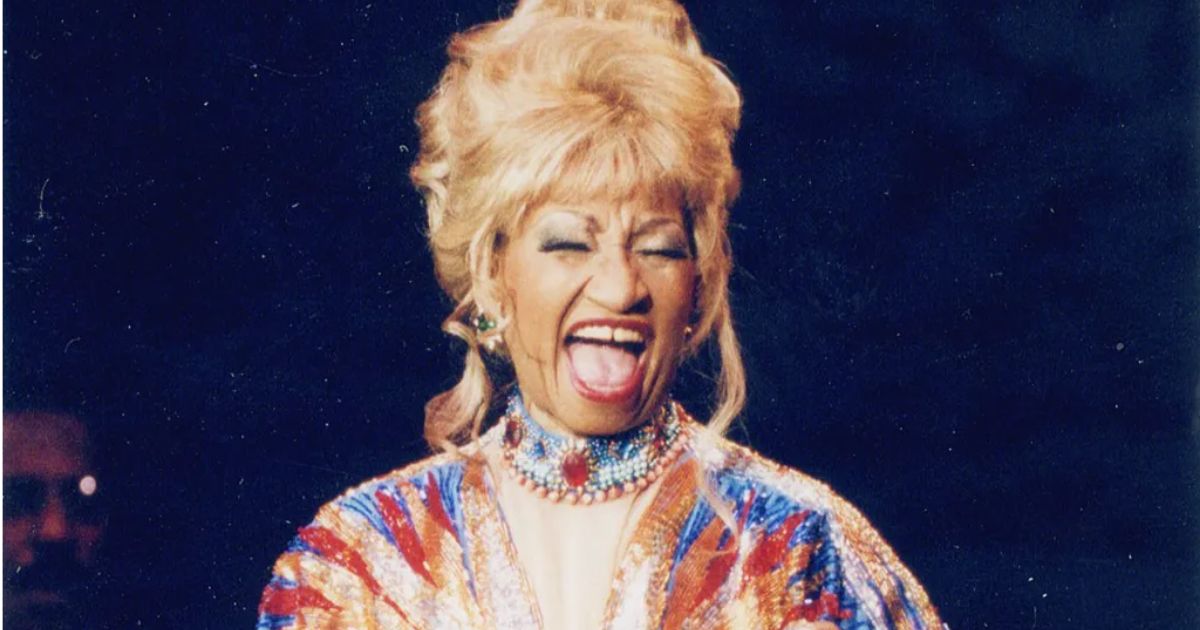
Her explosive performances—vibrant wigs, sequined gowns, and that booming voice—electrified audiences. Hits like “Quimbara,” “Bemba Colorá,” and “La Vida Es Un Carnaval” topped charts, making salsa a global phenomenon. Celia recorded 75 albums, 23 gold records, and performed in over 100 countries.
The Queen of Salsa: Signature Style and Cultural Impact
What made Celia Cruz a legend? Her voice soared through octaves with raw emotion, improvising lyrics (“soneos”) that captured joy and pain. She popularized “¡Azúcar!” as a tribute to Cuba’s sugar industry and a defiant celebration of Black sweetness in a bitter world.
As a proud Afro-Latina, Celia embraced her heritage, wearing Yoruba-inspired outfits and honoring santería roots. She bridged generations, collaborating with modern artists like Marc Anthony and Angela Carrasco. Her music empowered women, proving Cuban females could dominate a male-heavy genre.
Celia’s influence extends beyond music:
- Awards: 3 Grammys, 4 Latin Grammys, National Medal of Arts (1994), Presidential Medal of Freedom (posthumous).
- Firsts: First Latina on a U.S. quarter (2024), Smithsonian exhibit “¡Azúcar!” (2005). celiacruz.com
- Global Reach: Introduced Cuban rhythms to mainstream America, paving the way for artists like Gloria Estefan.
Exile and Legacy: A Life of Defiance and Joy
Celia never returned to Cuba, but her heart stayed there. “I am Cuban first,” she said, refusing to perform for Castro’s regime. In exile, she supported Cuban-Americans and fought for freedom.
Diagnosed with breast cancer in 2002, Celia battled fiercely, recording her final album La Negra Tiene Tumbao. She passed on July 16, 2003, at 77, in Fort Lee, New Jersey. Her funeral drew thousands; her ashes rest in New York and Havana (symbolically).
Today, Celia Cruz is the most searched “famous woman from Cuba.” Schools, streets, and festivals bear her name. Documentaries like Celia Cruz: Azúcar! and her biography Celia: My Life keep her story alive.
Why Celia Cruz Matters Today: Inspiration for Cuban Women and Beyond
In a world celebrating diversity, Celia Cruz embodies resilience. As one of the top “influential Cuban women,” she showed that exile couldn’t silence talent. Her message? Embrace your roots, add sugar to life’s bitterness, and dance through storms.
For fans of “Cuban female singers” or “women in Cuban history,” Celia’s life proves women from Cuba shape global culture. Stream her hits on Spotify—feel the ¡Azúcar!
Celia Cruz wasn’t just a singer; she was Cuba’s heartbeat. ¡Azúcar para siempre!