
In the dusty fields of Haryana’s Shahabad village, where the summer sun scorches the earth and hockey sticks are passed down like family heirlooms, Rani Rampal picked up a broken one at age 10 and began dreaming of stadiums far beyond the horizon. Born on 4 November 1994 to a railway ticket collector father and a homemaker mother, Rani grew up in a home where resources were as scarce as encouragement for girls in sports. Her father couldn’t afford a proper stick, so she practiced with a splintered remnant, wearing a salwar-kameez that restricted her swings, while neighbors whispered that hockey was no place for a daughter. Undeterred, she channeled that skepticism into fuel, becoming India’s youngest-ever international hockey player at 14, the captain who led the women’s team to its historic Olympic breakthrough, and the forward whose drag-flicks have etched her name as one of the greatest in Indian sports history.
At 31, as of November 2025, Rani remains a towering figure in the sport—retired from international play since 2023 but still mentoring the next generation as a coach and advocate. Her journey isn’t just about goals scored; it’s a testament to breaking barriers in a nation where women’s sports often fight for spotlight, turning personal grit into national glory.
Table of Contents
From Broken Sticks to National Arenas: A Humble Beginning
Rani’s first touch with hockey came not from coaches or academies, but from watching boys play near her home. Enrolling at the Shahabad Markandeya Hockey Academy in 2004, she faced ridicule for her gender and makeshift gear. “They said girls should be in the kitchen, not on the field,” she later recalled in an interview with the Olympics Channel. But her talent was undeniable. By 2008, at just 13, she was selected for the junior national camp. That same year, she made her senior international debut at the Olympic qualifiers in Chile—becoming the youngest player ever to represent India in hockey, male or female.
Her early promise shone at the 2009 FIH Women’s Champions Challenge II in Argentina, where she was named Young Player of the Tournament and top scorer, helping India secure silver. These weren’t flukes; they were the foundation of a career built on relentless training—waking at dawn for runs, enduring 10-hour practice sessions, and balancing school with sports in a family that sacrificed everything for her dream. Rani’s parents sold jewelry to fund her travels, a quiet act of faith that she repaid by lifting the family’s name from obscurity to national pride.
Olympic Fire and Leadership Under Pressure
Rani’s pinnacle came at the Tokyo 2020 Olympics (held in 2021), where she captained a young, resilient Indian squad to fourth place—the best finish ever for the women’s team in its third Olympic appearance. Facing the world’s top teams, including a stunning 1-0 quarterfinal upset over Australia (ranked No. 1), Rani’s leadership was the glue. She scored crucial goals, including in the bronze-medal match against Great Britain, and her drag-flicks—clocking speeds over 100 km/h—terrorized defenses. “As captain, I wasn’t just playing; I was carrying 1.4 billion dreams,” she said post-Tokyo, her voice steady despite the heartbreak of a 4-3 loss that denied bronze.
Her Olympic journey spanned three Games: Rio 2016, where India returned after 36 years; Tokyo, her crowning moment; and Paris 2024, though she retired before it to focus on coaching. Beyond Tokyo, Rani’s medal haul is staggering: silver at the 2017 Asia Cup, gold at the 2019 FIH Series Finals, bronze at the 2022 Commonwealth Games and 2023 Asian Games, and multiple Asian Champions Trophies. By her retirement, she had 375 international caps and over 100 goals, numbers that underscore her longevity in a high-injury sport.

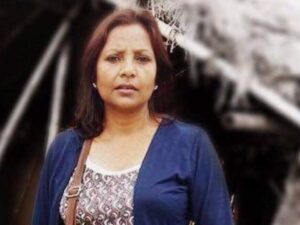
Rani Rampal – Captain of Indian Women’s Hockey
Read about the journey of Rani Rampal — her rise in women’s hockey, leadership on and off the field, and what her captaincy means for aspiring girls across India.
Awards, Advocacy, and the Fight Off the Field
Rani Rampal’s on-field excellence has been recognized with several prestigious honors. She received the Arjuna Award in 2016, India’s second-highest sporting accolade. In 2019, she was named World Games Athlete of the Year, the first hockey player to earn this distinction, and also received the Hockey India Award for Best Women Player. The following year, 2020, she was awarded the Major Dhyan Chand Khel Ratna, India’s highest sporting honor, alongside the Padma Shri, the nation’s fourth-highest civilian award; she attended the virtual ceremony in full PPE amid the COVID-19 pandemic. Earlier accolades include being named Young Player of the Tournament at the 2010 Women’s Hockey World Cup and Player of the Tournament at the 2013 Junior World Cup, where India won bronze. She was also selected for the FIH Women’s All-Star Team in 2010 and nominated for the FIH Young Player of the Year. In 2021, she was honored as Sportswoman of the Decade (Team Sports) at the Sportstar ACES Awards.
Beyond awards, Rani has been a vocal advocate for girls in sports, emphasizing financial independence and equal opportunities. In a January 2025 Olympic Channel interview, she stated that “timely recognition and awards for good performances boosted girls to take up sport,” crediting hockey for providing her with security and self-sufficiency. She has highlighted how sports challenge gender stereotypes, noting in a July 2025 Times of India podcast that her journey as the third daughter in her family was driven by a desire to “show that girls can change lives—their own and their families’.” At the September 2025 Sportstar PlayCom Summit, she called for equal funding for non-cricket sports, saying, “We work as hard as cricketers, so why don’t we get the same support?” and addressed parental biases like “khel se roti nahi milegi” (sport won’t earn a living). While not formally a UNICEF ambassador, her story has been featured in UNICEF South Asia materials as an example of how sports help girls overcome barriers, such as poverty and bias—echoing her own experience with a broken stick due to financial constraints.
Post-retirement in October 2024, Rani has focused on coaching to build the next generation. She was appointed chief coach of the Indian U-17 women’s national team in August 2023, a role she held into 2025. In January 2025, she became head coach and mentor for Soorma Hockey Club in the inaugural Women’s Hockey India League, where she emphasizes tactical development for junior forwards. She completed the FIH Educators Course in July 2024 to enhance her coaching skills. Earlier, she served as an assistant coach with the Sports Authority of India.
Final Thoughts
Rani Rampal didn’t just play hockey; she redefined it for Indian women—proving that from Haryana’s fields to the world’s podiums, determination dressed in salwar or kit changes everything. Her legacy? A nation that now cheers louder for its daughters on the turf.