“I was raped next to my husband’s decapitated body..”
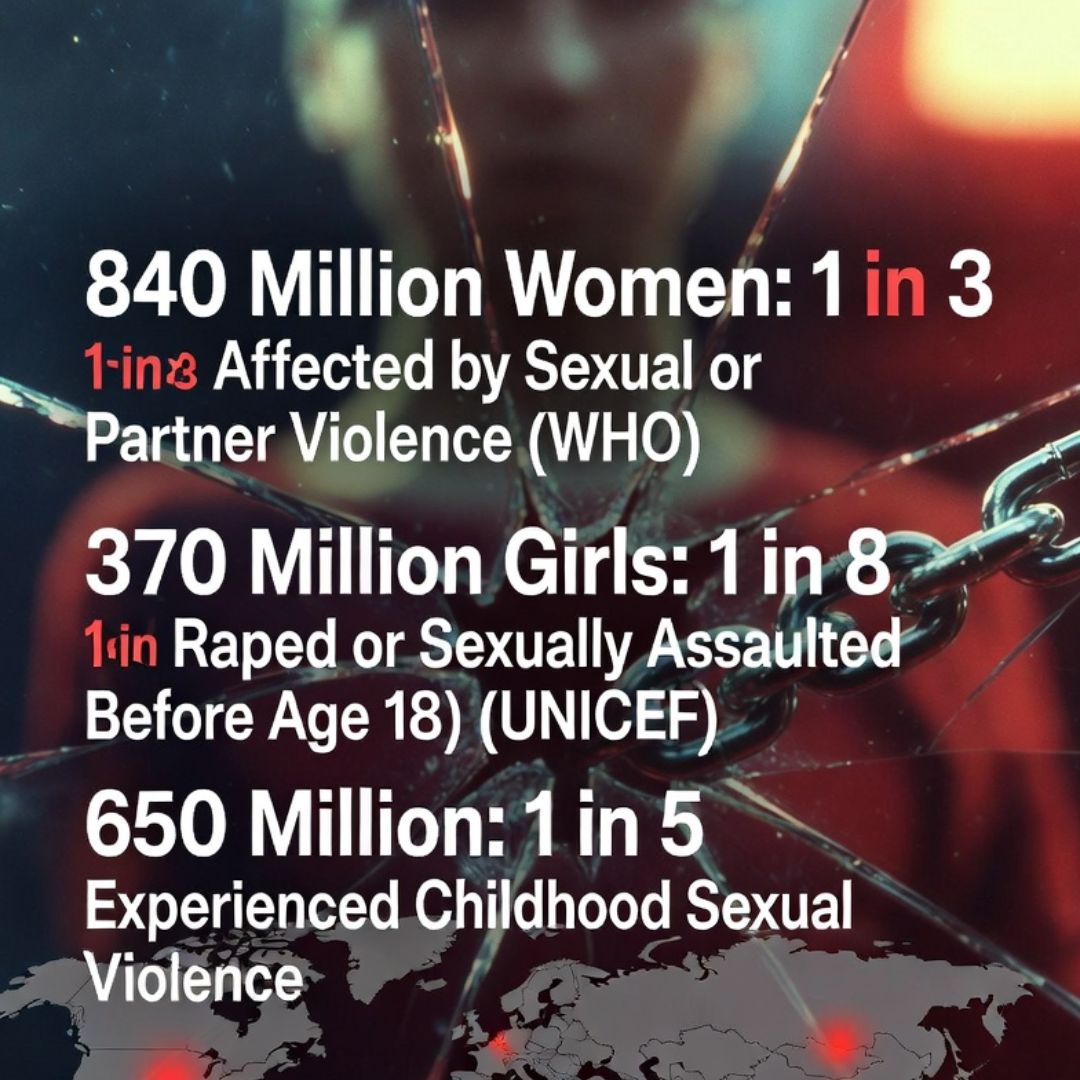
Rape is not a distant horror or a rare aberration. It is a daily, pervasive violation that scars hundreds of millions of lives across every continent, every culture, and every socioeconomic stratum. According to the most comprehensive data available in 2025, nearly 1 in 3 women approximately 840 million alive today have experienced physical or sexual violence from an intimate partner or non-partner sexual violence in their lifetime. This figure has barely budged since 2000, despite decades of awareness campaigns, legal reforms, and international pledges. For girls and women, the childhood toll alone is staggering: over 370 million (1 in 8) have endured rape or sexual assault before age 18. When non-contact forms like online harassment or verbal abuse are included, that number swells to 650 million—one in five. Boys and men are not spared: 240 to 310 million (roughly 1 in 11) faced rape or sexual assault as children.
These are not abstract numbers. They represent bodies broken, minds shattered, futures stolen. In fragile settings like conflict zones, refugee camps, areas with weak institutions the rate for girls jumps above 1 in 4.
Sub-Saharan Africa bears the heaviest burden for childhood contact sexual violence at 22% of girls and women affected.
Yet official police reports capture only a fraction of this reality. Underreporting rates hover between 60% and 90% globally, driven by shame, fear of retaliation, disbelief by authorities, and cultural norms that blame the victim. In Indonesia, over 90% of cases go unreported.
In the United States, only about 25% of rapes and sexual assaults were reported to police in recent years.
This article does not sugarcoat. It does not offer comforting platitudes or vague “empowerment” slogans. For RealShePower, the raw, unfiltered strength that comes from facing truth head-on, we must confront the epidemic with unflinching honesty. Rape is not primarily about strangers in dark alleys; 70-95% of cases involve someone the victim knows like partners, family, acquaintances, or authority figures. It is not “just sex gone wrong”; it is an act of domination, entitlement, and control. In war, it is deliberate strategy to destroy communities. The physical reality is often catastrophic: torn tissues, unwanted pregnancies, sexually transmitted infections including HIV, and in conflict zones, traumatic fistulas that leave women incontinent and ostracized. Psychologically, PTSD, depression, and suicidal ideation are rampant. Socially, survivors face rejection, divorce, honor killings, or lifelong stigma.
We will examine the statistics region by region, expose the myths that protect perpetrators, and draw directly from real survivor testimonies. No sanitized summaries. These are the voices of women and girls whose bodies were used as battlegrounds, whose trust was weaponized against them. This is the data and the human cost that every woman, every girl, and every ally must internalize if we are to dismantle the systems that enable it.
The Global Numbers: A Crisis Hidden in Plain Sight
The World Health Organization’s 2023 prevalence estimates (updated through 2025 data) paint a grim, stagnant picture. Lifetime intimate partner violence or non-partner sexual violence affects 840 million women. In the past 12 months alone, 316 million women (11% of those aged 15+) suffered physical or sexual IPV, with adolescent girls aged 15-19 hit hardest at 16%. Non-partner sexual violence has now been quantified for the first time at 263 million women since age 15.
UNICEF’s 2024 estimates, drawn from surveys across 120 countries (2010-2022), confirm the childhood epidemic: 370 million girls and women raped or sexually assaulted before 18. Regional hotspots include Sub-Saharan Africa (79 million affected, 22%), Latin America and the Caribbean (18%), and Oceania (34% in some fragile contexts). Boys suffer too, though data gaps persist—240-310 million raped or assaulted as children.
Reported rape rates per 100,000 population (UNODC data) are misleadingly high in countries with robust recording systems like Sweden (63+), Australia (28+), or the US (27+), and artificially low in places like India (around 2-4) or many Middle Eastern and African nations where shame silences victims. Botswana, Lesotho, and South Africa top reported lists, but this reflects neither “safety” nor “danger” accurately, only willingness to document. In reality, South Africa’s actual prevalence is among the world’s highest, with conflict and gender norms compounding the issue. Globally, over 250,000 rapes or attempted rapes are recorded annually by police in just 65 countries, but experts estimate the true figure is 10-20 times higher.
Conviction rates are abysmal often under 5-10% even in “developed” nations. Impunity is the norm.
Cultural entitlement plays a role: studies in parts of Asia and Africa show rapists citing “sexual entitlement” or punishment of women as motives, with many feeling no guilt afterward.
Regional Realities: From War Zones to “Safe” Streets
Sub-Saharan Africa: Rape as a Weapon of War
Nowhere is the brutality more systematic than in the Democratic Republic of Congo (DRC), long called the “rape capital of the world.” Since 1998, hundreds of thousands of women and girls and thousands of men and boys have been raped by militias, government forces, and rebels. In North Kivu alone, sexual violence cases surged 91% between 2021-2022, with over 10,400 reported in one month in 2024. In 2025, armed groups like M23 have continued the horror.
Survivor Christabelle, 10 years old, was raped alongside her mother by M23 insurgents in early 2025. She passed out from the pain. Nine-year-old Celine watched her mother stabbed to death before soldiers tried to rape her; frustrated by her small size, they beat her instead. Sixteen-year-old Darkuna and her sister were gang-raped by six gunmen who ransacked their home. “For God’s sake, what do you really want?” she cried. The answer was her body.
In Sudan, children as young as one have been raped since the 2023 conflict escalated. In 2024-2025, 221 child rape cases were recorded, including 16 under age 5; 66% girls, 33% boys.
These are not isolated atrocities. Rape here destroys entire communities: women are ostracized, families fractured, HIV spreads, and children born of rape are rejected. Fistulas—holes between vagina and bladder/rectum—leave survivors leaking waste, smelling, and abandoned. The physical reality is lifelong disability; the psychological toll is suicide or madness.
Asia: Cultural Silence and Impunity
In India, reported rates are low (around 4.4 per 100,000 women), but the actual scale is enormous. Over 95% of rapes are by known perpetrators. The 2012 Nirbhaya case where 23-year-old was gang-raped, tortured with an iron rod, and left to die on a Delhi bus, shocked the nation into protests and legal reforms. The Criminal Law (Amendment) Act 2013 expanded rape definitions, introduced death penalties for aggravated cases, and fast-track courts. Yet a decade later, crimes against women rose over 50%, and conviction rates remain dismal. Survivors still face victim-blaming: “What was she wearing?” “Why was she out at night?”
In Indonesia, 93% of rape victims in one poll never reported, fearing blame or family dishonor. Across South and Central Asia, virginity cults, honor codes, and family pressure ensure silence. Non-partner sexual violence estimates show Central and Southern Asia with millions affected in childhood.
Latin America and the Caribbean: Femicide and Everyday Terror
High rates of intimate partner violence (7% past-year prevalence, but lifetime much higher) intersect with machismo culture and weak justice systems. Gang violence and trafficking amplify the horror. One Mexican trafficking survivor estimated she was raped 43,200 times over four years up to 30 men daily after being lured into the trade.
Brazil records over 81,000 rape cases annually in recent data, with massive underreporting.
Europe and Northern America: Acquaintance Rape and Systemic Failures
Reported rates appear higher due to better systems—Sweden at 63+ per 100,000, US at 27—but this reflects reporting, not reality.
In the US, 1 in 6 women experience completed or attempted rape lifetime; most by acquaintances. Only 25% reported recently.
Campus assaults, date rape, and marital rape remain normalized in silence. Europe sees similar patterns: high non-partner violence in some surveys, but low convictions.
Everywhere, the pattern holds: power + entitlement + impunity = rape.
Real Stories: The Human Cost No Statistic Can Capture
Pitshou (DRC): “I said to the psychologist, when I tell this story I see a film playing in front of my eyes… I was raped next to my husband’s decapitated body.” Armed men invaded her home, murdered her husband, and violated her. She survived, but the trauma replays endlessly.
Darkuna (DRC, age 16): Six gunmen raped her and her sister after looting their home. Her grandmother could only watch.
Karla (Mexico/US trafficking survivor): Sold into sexual slavery, raped by 30 men daily for years. “43,200 times,” she calculated. HIV, trauma, and shattered dignity followed.
Eve (DRC): Repeatedly raped by her own father from age 13. Family turned against her when she sought justice. The legal system failed her; stigma nearly destroyed her.
Nirbhaya’s legacy (India): Though she died, her story ignited millions. Yet thousands of similar cases continue such as gang rapes on buses, in fields, in homes while survivors fight not just trauma but societal rejection.
These women did not “ask for it.” They were fetching water, sleeping in their beds, trusting family. The rapists were soldiers, fathers, acquaintances, strangers with power.
The Brutal Aftermath: Bodies, Minds, Societies Destroyed
Physically: Vaginal tearing, anal trauma, broken bones, internal injuries. In conflict, objects used as weapons. Unwanted pregnancies (thousands in DRC alone). HIV rates skyrocket up to 30% in some survivor cohorts. Fistulas require surgery many cannot access.
Mentally: 30-50% develop PTSD. Flashbacks, nightmares, dissociation. Suicide attempts spike. Shame becomes identity: “I am ruined.”
Socially: Husbands abandon wives. Families disown daughters. Communities shun “spoiled” women. In honor cultures, killings follow. Children of rape are outcasts. Economies suffer—survivors cannot work, communities fracture.
This is not “overcoming adversity.” This is survival against a system designed to break women.
Myths, Entitlement, and the Roadblocks to Justice
Myth 1: “Stranger danger.” Reality: Known perpetrators dominate.
Myth 2: “She provoked it.” Reality: Clothing, alcohol, location do not cause rape—rapists do.
Myth 3: “False reports are common.” Reality: 2-10%, same as other crimes.
Root causes: Patriarchy normalizes male entitlement. War uses rape to terrorize. Poverty and weak states enable impunity. Cultural norms in some regions tolerate or minimize it.
RealShePower: Facing Truth, Demanding Change
RealShePower is not performative. It is refusing silence. It is believing survivors. It is teaching boys that no means no, that entitlement is poison. It is funding shelters, reforming laws for faster justice, training police without bias. It is women supporting women across borders—hotlines, safe houses, economic independence programs.
Progress exists: #MeToo shifted narratives in the West. India’s post-Nirbhaya laws. DRC’s specialized hospitals like Panzi. But the numbers show we are losing ground. Climate crises, conflicts, and backlash threaten worse.
Conclusion: No More Shadows
840 million women. 370 million girls raped as children. Millions more unreported, uncounted, unseen. This is the reality. For RealShePower, we reject denial. We name the violence. We hold perpetrators accountable regardless of status, culture, or uniform. We build systems that protect, not punish, survivors.
Every woman reading this carries the potential to break the cycle for herself, her daughters, her sisters worldwide. Speak. Organize. Refuse to look away. The statistics are horrifying. The stories are gut-wrenching. But truth is the first weapon. Wield it.
Sources drawn from WHO, UNICEF, UNODC, survivor testimonies, and verified reports as of 2025-2026. This is not exhaustive but a call to confront the epidemic without illusion.