
In the humid pulse of Nigeria’s Delta region, where the Niger River fans out into a thousand silver threads before meeting the Atlantic, Ngozi Okonjo-Iweala was born on 13 June 1954 in the village of Ogwashi-Uku. Her father, a professor of economics and traditional ruler (Obi) of the town, and her mother, a sociology lecturer, made sure their children understood that knowledge was the only inheritance that could never be stolen. When the Biafran War broke out in 1967, 13-year-old Ngozi walked for days with her grandmother, carrying her younger sister on her back, to escape the advancing federal troops. She still remembers the hunger, the fear, and the quiet resolve that later defined her career: crises are survived not by panic, but by planning.
Today, at 71, she is the first woman and the first African to lead the World Trade Organization (WTO) as Director-General — a position she has held since March 2021 and was unanimously renewed for a second term in November 2024. In a male-dominated arena of global trade negotiations, she has become the calm, steel-spined voice that forces superpowers to listen when the poorest nations speak.
Table of Contents
From Harvard Yard to Abuja’s Corridors of Power
Ngozi left Nigeria at 18 on a scholarship to study at Harvard University, graduating magna cum laude in economics in 1976. She stayed on for a PhD in regional economics and development from MIT in 1981, writing her dissertation on credit policy and rural financial markets in Nigeria — research that would later save thousands of small farmers from predatory lending.
In 1982 she joined the World Bank as a development economist, rising over 25 years from junior roles to Managing Director (2007–2011), the number-two position in the institution. She oversaw an $81 billion portfolio covering 81 countries in Africa, South Asia, Europe and Central Asia. Colleagues remember her walking into crisis meetings with spreadsheets in one hand and a smile that could disarm the most hostile finance minister.
In 2003, Nigeria’s newly elected president Olusegun Obasanjo called her home. She accepted the Finance Ministry on one condition: she would have the power to publish oil revenues monthly and prosecute corruption. What followed was seismic. She negotiated the cancellation of $18 billion in Nigerian debt (60 % of the total), introduced electronic financial management systems, and published monthly allocations to all 36 states — a transparency revolution that earned her death threats and a 2005 kidnapping of her 83-year-old mother by criminals who demanded her resignation. She refused to step down. Her mother was released unharmed after 11 days.
She served again as Finance Minister (2011–2015) under President Goodluck Jonathan, launching the “YouWiN!” programme that gave grants to 1,200 young entrepreneurs (70 % women) and helped create over 100,000 jobs. She also stabilised the naira during the 2014 oil-price collapse and built Nigeria’s sovereign wealth fund from zero to $2 billion.

Africa’s Natural Wonders – 7 Spectacular Beauties
Explore seven breathtaking natural landscapes across Africa — from savannahs to waterfalls, deserts to forests — each offering unique beauty and adventure for travellers.
The WTO Years: Making Trade Work for the Poorest
When Ngozi took the helm of the WTO in March 2021, the organisation was on life support: paralyzed by U.S.–China tensions, battered by COVID-19 supply-chain chaos, and facing accusations of irrelevance. In four years she has delivered results few thought possible:
- Brokered the first multilateral trade agreement in eight years (June 2022) on fisheries subsidies — the biggest ocean-conservation deal in history.
- Secured a waiver on COVID-19 vaccine patents (2022), extended to diagnostics and therapeutics in 2023, allowing poorer nations to produce generics.
- Led the 2024 deal to permanently ban customs duties on digital transmissions (worth $1 trillion annually in trade).
- Pushed through reforms that revived the WTO’s dispute-settlement system by appointing facilitators and restoring appellate body functions by stealth.
- Launched the $50 million Cotton Initiative for West African farmers and the Women Exporters in the Digital Economy Fund.
In 2025, she continues to negotiate the next phase of the fisheries agreement and a pandemic-response treaty that would force rich nations to share medical countermeasures faster next time.
A Life Beyond the Numbers
Married to neurosurgeon Dr Ikemba Iweala since 1978, she is mother to four children (one of whom, Uzodinma Iweala, wrote the acclaimed novel Beasts of No Nation). She still finds time to mentor young African women economists, insisting they learn both the models and the moral courage to use them.
Forbes ranked her the world’s most powerful woman in 2024; Time has named her to its 100 list twice; she holds 17 honorary doctorates. Yet when asked what she is most proud of, she answers simply: “That I never accepted that things had to stay broken.”
Ngozi Okonjo-Iweala did not just break glass ceilings — she melted them down and forged them into tools that lift entire continents. In the dry, fluorescent-lit rooms of Geneva, where the fate of billions in trade is decided, a daughter of Ogwashi-Uku sits at the head of the table, speaking softly, smiling rarely, and changing the world one hard-won paragraph at a time.
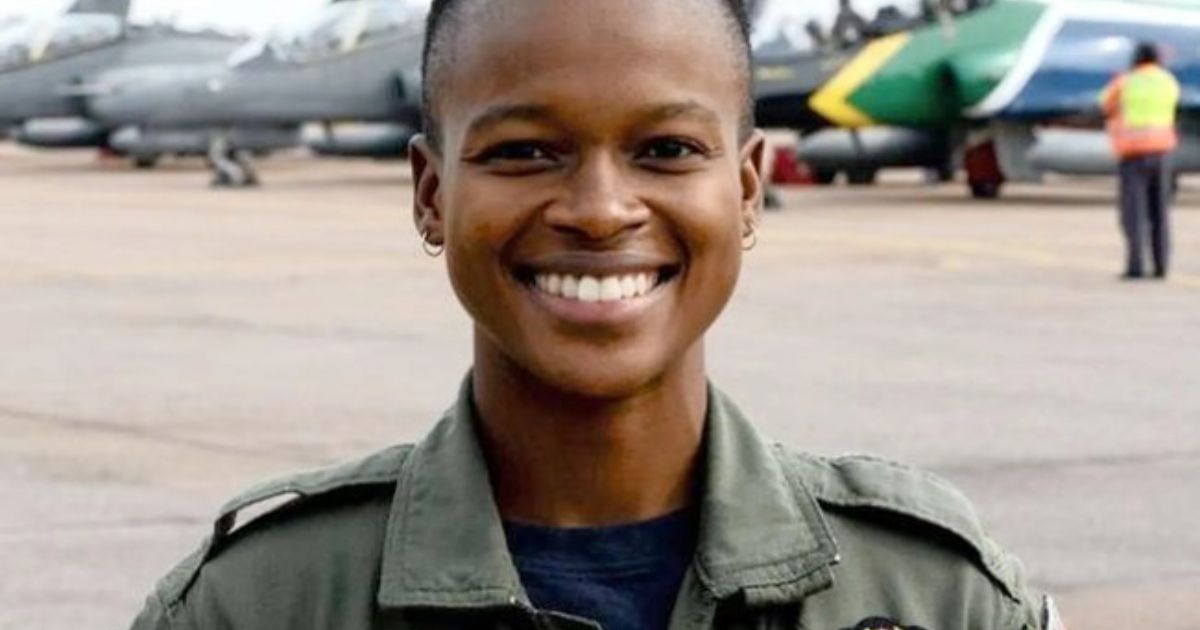
Mandisa Mfeka – First Black Female Fighter Pilot
The inspiring journey of Major Mandisa Mfeka — breaking barriers in aviation and rewriting what’s possible for women of colour globally.