
In the salt deserts of Gujarat and the drought-cracked villages of Rajasthan, where men once migrated for survival and women were expected to disappear behind veils and silence, something impossible has happened.
Over 24 million women, most of them illiterate, most of them from the lowest castes and tribes, now collectively own assets worth more than $2.5 billion USD. They run 8,000+ cooperatives, control solar farms, pharmaceutical units, 300,000 hectares of farmland, and the world’s largest camel-wool supply chain. They have built their own banks, their own university, their own 5G network in villages, and their own political party that wins local elections.
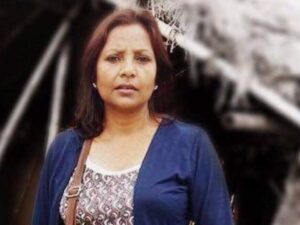
The architect of this quiet economic revolution is one soft-spoken Gandhian economist who still travels by overnight sleeper bus and refuses to wear shoes in rural areas: Dr. Reema Nanavaty.
At 61, Reema is the director of SEWA, the Self-Employed Women’s Association, the largest trade union of informal-sector women on Earth. But she is no longer just a union leader. She is the woman who proved that extreme poverty can be ended not with charity, but with ownership, and that the fastest way to transform a nation is to put capital directly into the hands of its poorest women.
This is the story of India’s most powerful woman you’ve probably never heard of, and how she turned the world’s biggest population of invisible workers into its largest sisterhood of entrepreneurs.
Table of Contents
From Refugee Camps to Revolution
Reema was born into a middle-class family in Ahmedabad, but her life changed in 1984 when she watched anti-Sikh riots tear her city apart. She dropped out of her master’s degree to work in refugee camps, and there she met Ela Bhatt, the legendary founder of SEWA. Ela gave her one instruction: “Go live with the salt-pan workers. Don’t come back until you understand why they remain poor despite working 16 hours a day.“
Reema spent months sleeping on salt flats, eating what the women ate, carrying 30 kg head-loads of salt under 45 °C sun. She discovered the brutal truth: these women produced the salt that reached every Indian kitchen, yet earned less than 10 cents a day because middlemen took 90 % of the profit.
Her solution was radical and simple: cut out every middleman and make the women the owners of the entire supply chain.
That idea, born in 1993 with 300 salt workers, is now a $2.5-billion empire run entirely by women who once signed documents with thumbprints.
The Numbers That Shame Every Development Agency
In 2025, SEWA under Reema’s leadership has achieved what the World Bank, IMF, and Indian government combined have not:
- 24.3 million members across 18 Indian states and 9 countries
- 63 % of members have crossed the international poverty line on their own income (no subsidies, no handouts)
- Women own 310,000 hectares of degraded land now turned into organic farms worth $420 million
- SEWA Bank (founded by illiterate women in 1974) has $380 million in assets and 98 % repayment rate, better than most commercial banks
- 1.2 million solar lanterns produced and sold by rural women engineers
- RUDI, their food-processing company, turns over $110 million annually and reaches 300,000 villages with zero marketing budget
And the most astonishing statistic: in villages where SEWA works, domestic violence has dropped by over 80 %. Because when a woman earns more than her husband and the house is in her name, fists stop flying.
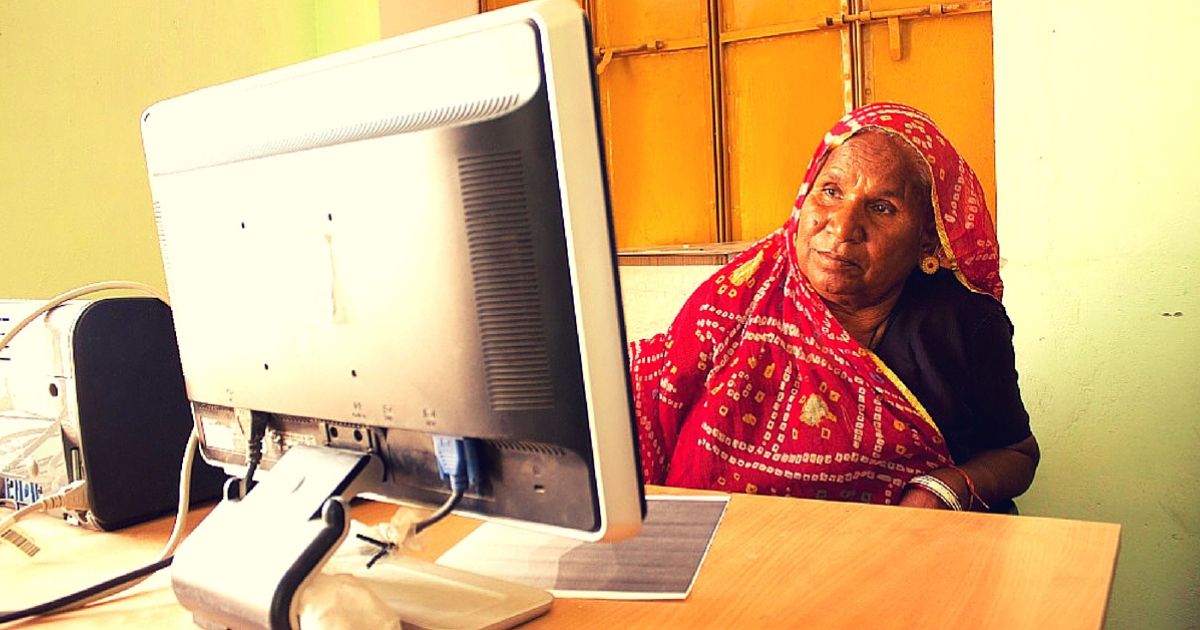
Who Is Nauroti Devi — A Revolutionary Leader
Dive into the inspiring life of Nauroti Devi: educator, trailblazer and voice for social change. Discover how her courage and vision reshaped communities and empowered women’s rights.
The Tools of a Revolution: Bare Feet, Satellite Maps, and Sisterhood
Reema’s methods are deceptively low-tech and devastatingly effective:
- She maps every village using barefoot women surveyors who walk door-to-door for months.
- She creates producer companies owned 100 % by the women, no NGOs, no government equity.
- She links them to global markets directly: SEWA salt is now in Whole Foods USA; SEWA embroidery is in IKEA Sweden.
- She uses satellite imagery to reclaim encroached common lands, a tactic that has returned 200,000 hectares to women in the last decade alone.
In 2024, when drought destroyed crops in Rajasthan, Reema mobilized 180,000 women to rebuild 8,000 check dams in 100 days, entirely with local labor and zero external funding. NASA later confirmed the region’s groundwater table rose by 4 meters, the fastest recovery ever recorded.
The Day She Buried Neoliberalism in One Sentence
In 2023, at the G20 summit in New Delhi, a famous American economist lectured India on why women’s self-help groups “don’t scale.” Reema was given three minutes to respond.
She walked to the podium in her simple cotton sari, no notes, no slides, and said:
“You measure scale in dollars. We measure it in daughters who no longer have to marry at 14 because their mothers now earn more than the groom’s family. By that metric, we are the largest women’s economy on Earth. Thank you.”
The room of finance ministers was silent for seven full seconds. Then the women in the audience stood and clapped until security asked them to stop.
The Price She Pays Quietly
Reema has no security despite multiple death threats from liquor mafias whose business collapsed when SEWA women took over village shops. She still lives in the same modest SEWA campus dormitory she moved into in 1987. She has missed every school function of her only son because she was in some village delivering a tractor to women who had never touched a steering wheel.
When asked about burnout, she laughs: “I sleep four hours a night. The women I work with sleep three. I have no right to complain.“
What Reema Nanavaty Has Already Won (and What She Still Wants)
By 2025:
- SEWA women own 42 % of all solar energy capacity in rural Gujarat
- They produce 28 % of India’s artisanal textile exports
- Their university in Ahmedabad is the first in the world run entirely by formerly illiterate women
Her next target? By 2030 she wants 50 million women to own one hectare of land each. That would make Indian rural women the largest landowners in history.
She says it casually, the way other people talk about buying groceries.
The Future Is Already Here – It’s Just Owned by Women in Cotton Saris
Walk into any SEWA village today and you will see something that still shocks foreign journalists:
Women sitting under trees counting crores on mobile apps.
Little girls doing homework under solar lamps their mothers assembled.
Grandmothers driving tractors while wearing nose rings and veils.
Reema Nanavaty never appears on the Forbes billionaire list because the wealth she creates is distributed, not hoarded.
But if you measure power by how many lives you have irreversibly changed, she is one of the richest women alive.
And she is still barefoot, still walking, still refusing to stop until every poor woman in the world owns the ground she stands on.