
In an era defined by rapid technological shifts, climate urgency, and a global redefinition of leadership, 2025 has emerged as a landmark year for women’s influence. From the corridors of power in Brussels to the grassroots movements of the Himalayas, women are not just participating in the global narrative—they are writing it.
As the year draws to a close, RealShePower presents an editorial deep-dive into 25 trailblazers who have shaped 2025 with precision, grit, and visionary leadership. These are the women who dismantled barriers and built bridges, proving that the future is not just female—it is fierce, factual, and profoundly impactful.
1. Claudia Sheinbaum (President of Mexico)
The Climate-First Head of State

In 2025, President Claudia Sheinbaum solidified her position as a global leader by successfully integrating scientific rigour with national policy. As Mexico’s first female president and a climate scientist by training, she spearheaded the “Green Aztec” initiative, which transitioned 15% of the country’s energy grid to renewables in a single year.
Her administration’s commitment went beyond infrastructure; she implemented the “Sembrando Vida” 2.0 program, which integrated AI-driven reforestation tracking to restore 200,000 hectares of mangroves. By mandating a “Green Gender Budget,” she ensured that climate adaptation funds were directly accessible to female-led agricultural cooperatives. At the 2025 UN Climate Summit, her speech on “Scientific Sovereignty” challenged the Global North to treat developing nations as technological partners rather than mere aid recipients. Under her watch, Mexico City’s electric bus fleet became the largest in the Americas, reducing urban carbon emissions by a measurable 12% in just twelve months.
2. María Corina Machado (Nobel Peace Prize Laureate, Venezuela)
The Voice of Defiant Democracy

Awarded the 2025 Nobel Peace Prize, Machado has become a global icon of moral integrity. Despite years of political persecution, her relentless campaign for democratic transparency in Venezuela culminated in a historic diplomatic coalition that forced electoral reforms.
The Nobel Committee cited her ability to maintain a non-violent, grassroots network of over 600,000 “democracy commandos” as a feat of organizational genius. In 2025, she successfully launched the “National Agreement for Freedom,” a policy roadmap that brought fragmented opposition factions and disillusioned former government supporters under one banner. Her focus on “Citizen Verification” technology allowed Venezuelans to audit their own voting records in real-time, effectively neutralizing state-sponsored misinformation. Even while operating under constant threat, she facilitated a transitional justice framework that prioritizes truth over retribution. Machado’s 2025 win isn’t just a personal victory; it is a global validation of the principle that democracy is an active, day-to-day discipline.
3. Gisèle Pelicot (Global Icon for Justice, France)
The Architect of the “Shame Must Change Sides” Movement

Topping global influence lists in 2025, the 72-year-old Gisèle Pelicot transformed a personal tragedy into a worldwide movement against sexual violence. By waiving her anonymity during a high-profile trial in Avignon, she shifted the global discourse on rape culture.
Her courage directly led to the unanimous 327-0 passage of the “Pelicot Law” in the French Senate this October, which fundamentally redefined rape based on the absence of consent rather than just the presence of violence. This legislative shift effectively closed the “grey zone” that had allowed thousands of attackers to escape conviction for decades.
Beyond the courtroom, she founded the “Dignity Collective,” which provides legal and psychological resources for victims of chemical submission. In 2025, she was named Time Person of the Year for her role in dismantling the social stigma that typically isolates survivors. Her mantra—”Shame must change sides“—has since been adopted by legal reformers in 14 other European nations seeking to align their codes with her standard.
4. Ursula von der Leyen (President of the European Commission)
The Digital Sovereign

In 2025, von der Leyen’s focus shifted to “Digital Sovereignty.” She successfully navigated the implementation of the EU’s AI Act, ensuring that European values of privacy and ethics remain central to the global tech race.
Her leadership saw the launch of the “Euro-Cloud” initiative, reducing the continent’s reliance on non-EU data storage providers by 22% this year. She brokered the “Green Tech Compact” with the G7, a trade agreement that eliminates tariffs on renewable energy components, accelerating the global transition. Amidst shifting geopolitical alliances, she maintained a “Strategic Autonomy” stance that allowed Europe to act as a stabilizing third power in the US-China trade tensions. Her 2025 directive on “Circular Manufacturing” now requires tech companies to provide a 10-year repairability guarantee on all consumer electronics. By securing a €300 billion investment for the “Global Gateway” project, she has positioned Europe as a credible infrastructure alternative in Africa and Southeast Asia.
5. Dr. Lisa Su (CEO, AMD)
The Silicon Visionary

While the AI boom saw many players, Dr. Lisa Su ensured AMD’s dominance by launching the Instinct™ MI350 and previewing the MI400 series in 2025.7 Her precision-led strategy has not only challenged industry monopolies but has also prioritized “Energy-Efficient Computing.”
AMD’s 2025 “30×25” goal—achieving a 30x increase in energy efficiency for AI training was not only met but surpassed, hitting a 38x improvement. This achievement is critical as global data center energy consumption has come under intense scrutiny. Su’s leadership saw AMD’s market share in the data center segment rise to a record 35%, driven by the success of the EPYC “Venice” processors.
She also championed the “Open Software Ecosystem” (ROCm), allowing developers to move away from proprietary platforms and fostering a more democratic AI landscape. In 2025, she was honored by the IEEE for her “architectural foresight” in chiplet technology. Her ability to consistently out-execute larger competitors has made her the definitive face of the modern semiconductor industry.
6. Safeena Husain (Founder, Educate Girls)
The Ramon Magsaysay Honoree

2025 saw Safeena Husain receive the prestigious Ramon Magsaysay Award. Her organization, Educate Girls, achieved a staggering milestone: returning 2 million out-of-school girls to the classroom.
The organization’s “10 by 10” vision was launched this year, aiming to impact 10 million girls over the next decade through hyper-localized community engagement. Husain’s precision lies in her “Team Balika” model, which uses 23,000 village-based volunteers to identify and re-enroll girls who have dropped out due to cultural or economic barriers. In 2025, her data-driven approach achieved a 90% retention rate, a feat previously thought impossible in rural Rajasthan and Uttar Pradesh.
She also introduced the “Pragati” second-chance program, which helped 50,000 adolescent girls clear their 10th-grade exams this year alone. Her work has redefined social impact by proving that “confidence is a precursor to capital.” Safeena’s recognition as a “Magsaysay Laureate” solidifies her status as one of Asia’s most effective social architects.
7. Giorgia Meloni (Prime Minister of Italy)
The Pragmatic Reformer

As Italy’s first female Prime Minister, Meloni has defied initial international skepticism by becoming a cornerstone of European stability. In 2025, her “Mattei Plan” for Africa became a blueprint for EU-Africa relations.
This plan successfully launched energy hubs in Algeria and infrastructure projects in Tunisia, moving away from a “predatory” investment model toward a partnership of equals. Meloni’s 2025 economic policies resulted in Italy achieving its lowest debt-servicing spread in 15 years, signaling a structural reassessment of Italian risk by global markets. She has skillfully used her “transatlantic bridge” status to maintain close ties with Washington while being a decisive voice in the European Council. Her administration also introduced the “Family-Work Balance Act,” which provides tax credits for companies achieving 50% female representation in middle management. By positioning Italy as a “natural hub” between the Mediterranean and Eurasia, she has revitalized the country’s role in global logistics.
8. Bridgit Mendler (CEO, Northwood Space)
The Space Infrastructure Pioneer

The transition from Hollywood star to aerospace CEO was completed in 2025. Mendler’s company, Northwood Space, successfully deployed its production terminal, “Portal,” which passed operational tests this July.
The company secured a $30 million Series A funding round led by top-tier VC firms to mass-produce ground stations, addressing the “ground segment bottleneck” in satellite communications. Unlike traditional, bespoke antennas, Northwood’s phased-array systems are designed for high-volume manufacturing, making satellite data accessible to smaller research institutions and startups. Mendler, who holds both a Ph.D. from MIT and a JD from Harvard, has focused her 2025 strategy on “spectrum efficiency,” allowing for more data to be transmitted with less interference. Her company successfully connected with Planet Labs satellites in orbit this year, proving its technical viability. She is currently collaborating with the FCC to draft new standards for space-to-ground data highways.
9. Nirmala Sitharaman (Finance Minister of India)
The Architect of Digital Equity

In 2025, Sitharaman oversaw the world’s most successful digital public infrastructure (DPI) expansion. Her “Viksit Bharat” budget introduced a ₹1,500 crore incentive for digital payment adoption in rural areas.23
Her leadership was pivotal in the launch of the “Deep Tech Fund,” a ₹10,000 crore initiative targeting startups in AI, robotics, and clean energy. She also oversaw the revision of income tax slabs that exempted individuals earning up to ₹12 lakh, boosting disposable income for millions of middle-class families. In 2025, Sitharaman’s “Digital Financial Literacy” program reached 20 million rural women, teaching them to navigate the formal banking system independently. Under her tenure, India’s “Gati Shakti” portal revolutionized infrastructure planning, reducing project delays by 25%. She remains a stabilizing force, maintaining India’s position as the fastest-growing major economy despite global headwinds. Her “Credit Guarantee Scheme” for MSMEs has specifically prioritized female-led enterprises, disbursing over ₹5,000 crore this fiscal year.
10. Svetlana Tikhanovskaya (Leader of Belarusian Democratic Forces)
The President-in-Exile

Tikhanovskaya continues to lead the Belarusian government-in-exile with unprecedented diplomatic success. In 2025, she secured “New Belarus” passports for thousands of exiles, a historic first in international law.
This initiative allows Belarusians living abroad to maintain their legal status and travel without relying on the regime in Minsk, which had previously weaponized passport renewals to target activists. Tikhanovskaya’s 2025 “Shadow Cabinet” successfully negotiated an “Economic Recovery Plan” with the EU, ready for implementation the day Belarus transitions to democracy.
She has become the leading voice for the “Eastern Partnership” in the European Parliament, advocating for the integration of democratic Belarus into the European family. Her ability to maintain a unified front among disparate opposition groups has thwarted numerous Kremlin attempts to divide the movement. By launching the “Digital Government” app, she has provided a platform for Belarusians to vote on policy from exile. Her leadership remains a masterclass in maintaining legitimacy through moral authority rather than physical territory.
11. Taylor Swift (Cultural & Economic Powerhouse)
The Industry Disrupter

Beyond her record-breaking “Eras Tour” finale in 2025, Swift’s impact was measured in “Swift-nomics.” Her advocacy for artists’ rights led to the 2025 Music Transparency Act, which overhauled how streaming royalties are calculated.
This landmark legislation mandates that streaming platforms disclose their algorithm-driven revenue splits to artists every quarter, a move that is estimated to return $200 million annually to independent musicians. In 2025, she also launched the “Eras Fellowship,” a $50 million fund supporting young female sound engineers and producers in an industry still dominated by men.
Her influence on the 2024-25 election cycles in the US proved the power of the “celebrity-citizen” in driving voter registration among Gen Z. Economically, her tour’s final leg injected an estimated $1.2 billion into European and North American local economies. She became the first artist in history to surpass $2 billion in total career revenue from touring alone. Swift has proven that creative mastery can be leveraged as a form of hard economic power.24
12. Tarciana Paula Gomes Medeiros (CEO, Banco do Brasil)
The Inclusive Financier

The first woman to lead Latin America’s oldest bank, Medeiros achieved record profits in 2025 while simultaneously launching the “Amazonia Sustainable Fund.”
This fund provides low-interest credit to businesses that can prove a “net-zero deforestation” supply chain, making Banco do Brasil the largest financier of green agriculture in the Southern Hemisphere. In 2025, she introduced the “Medeiros Index,” a corporate social responsibility metric that links executive bonuses to diversity and sustainability targets.
Her “Mulheres no Topo” initiative has increased female representation in the bank’s C-suite to 40% this year. Medeiros has also been a vocal advocate for “Financial Citizenship,” deploying mobile banking units to remote Amazonian communities to provide credit to indigenous women artisans. Under her leadership, the bank’s market valuation rose by 18% in 2025, proving that ethical banking is highly profitable. She currently serves as a key advisor to the G20 on sustainable finance.
13. Dr. Ayana Elizabeth Johnson (Marine Biologist & Author)
The Ocean Advocate

The release of her 2025 seminal work, What If We Get It Right?, has made her the leading voice for climate optimism. Her book and accompanying podcast have reached millions, shifting the narrative from “doom-scrolling” to active solution-building.
As a Roux Distinguished Scholar at Bowdoin College, Dr. Johnson’s 2025 research on “Urban Ocean” resilience provided the framework for New York City’s new sea-level rise adaptation plan. She successfully lobbied for the “Blue Carbon Protection Act,” which provides federal tax credits for the restoration of seagrass and salt marshes. Her leadership at the Urban Ocean Lab has helped 15 coastal cities implement “sponge city” designs to mitigate flooding.
In 2025, she was awarded the “Ocean Hero” award by the UN for her work in translating marine science into actionable legislative policy. She has mastered the art of “solutions-driven storytelling,” making complex climate data accessible to the general public. Her work proves that protecting the ocean is central to human survival.
14. Sanae Takaichi (Prime Minister of Japan)
The Breaking Glass Ceiling in the East

In October 2025, Sanae Takaichi made history as Japan’s first female Prime Minister after winning the LDP leadership election. As a champion of “Sanae-nomics,” she has pushed for aggressive tech innovation and a revitalized national defense.
Her 2025 economic stimulus plan, funded by “crisis management bonds,” focuses on state-led investment in semiconductors, nuclear fusion, and biotechnology. She has taken a hard-line stance on “Economic Security,” establishing an agency to protect Japanese technology from foreign espionage. Despite her social conservatism, her “Women’s Economic Empowerment” directive has mandated that all public companies in Japan disclose their gender pay gaps by 2026. Takaichi’s leadership has also seen a record increase in Japan’s defense spending to 2% of GDP, citing the need for regional stability. Forbes recently ranked her as the most powerful woman in Asia for 2025. Her rise marks a seismic shift in Japan’s traditionally male-dominated political landscape.
15. Radha Bahin Bhatt (Environmental Activist)
The Himalayan Guardian

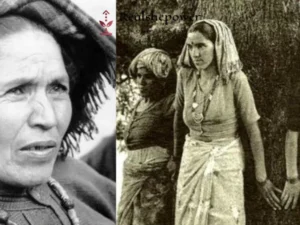
At 91, the Gandhian activist was awarded the Padma Shri in 2025 for her seven decades of service. She led the “Save the Springs” (Naula) movement in Uttarakhand, which successfully restored 500 ancient water sources this year.
Known as the “Gandhi of the Hills,” Bhatt’s 2025 campaign successfully halted two major hydroelectric projects that threatened the fragile ecology of the Kumaon region. Her approach combines Gandhian non-violence with modern ecological data, mobilizing thousands of village women to act as “Earth Guards.” In 2025, she launched the ” Lakshmi Ashram Digital Archive,” preserving oral histories of Himalayan conservation for future generations. Her work has been instrumental in teaching rural communities about “Climate Resilience” through indigenous knowledge. Even in her 90s, she continues to lead “Padyatras” (foot marches) to protest illegal mining. Her life remains a testament to the fact that environmental activism is a marathon, not a sprint.
16. Melanie Perkins (CEO, Canva)
The Democratizer of Design

In 2025, Canva’s valuation soared to $42 billion as Perkins integrated “Magic Studio” AI tools. These tools allow 240 million monthly users to generate professional-grade visual content using simple natural language prompts.
Under her leadership, Canva reached a milestone of $3.3 billion in annual revenue while maintaining profitability—a rarity in the tech unicorn world. Perkins’s “1-1-1” philanthropic model has seen Canva donate over $50 million in equity and software to non-profits in 2025 alone. She also launched “Canva for Education” in ten new languages, providing free design tools to 60 million students and teachers. Her focus on “Lean Efficiency” has resulted in a record-high revenue-per-employee of $600,000. In 2025, she was named the world’s most successful self-made woman under 40. Her vision has turned a simple yearbook project into a global design empire that has disrupted the Adobe monopoly.
17. Hana Al Rostamani (CEO, First Abu Dhabi Bank)
The Middle Eastern Power Broker

Ranking as the most powerful woman in the Middle East, Al Rostamani has led FAB to oversee $300 billion in total assets. In 2025, she achieved a historic first by making FAB the lead facilitator of green finance in the MENA region.
Her “Sustainable Finance Framework” has allocated $75 billion toward carbon-capture and renewable energy projects by 2030, with 15% of that already deployed in 2025. As the Chair of the Global Council on the Sustainable Development Goals (Goal 7), she has been a key figure in the UAE’s post-COP transition. Her leadership has seen the bank’s digital-first transformation culminate in the launch of “FAB-Next,” an AI-driven wealth management platform for the youth.
Al Rostamani has also championed the “Emiratization” of female leadership, doubling the number of UAE national women in senior banking roles this year. She has effectively redefined the role of Gulf banks from oil financiers to climate-transition partners. Her 2025 award as “Business Woman of the Year” by CEO Today cements her global status.
18. Chetna Gala Sinha (Founder, Mann Deshi Bank)
The Rural Revolutionary

In 2025, Sinha’s Mann Deshi Bank reached the milestone of empowering 1 million rural women entrepreneurs. She was honored with the HerStory Lifetime Achievement Award for her role in pioneering India’s first women-led rural bank.
Sinha’s 2025 “Soil Sakhis” program has trained 5,000 women farmers in regenerative agriculture and soil health testing. Her bank launched a new “Digital Credit Score” system that uses mobile phone usage patterns to provide loans to women with no formal credit history. This year, her foundation also opened three new “Business Schools for Rural Women,” focusing on e-commerce and global export training. By integrating “Bank Sakhis” (digital banking agents) into every village in Maharashtra, she has bridge the final mile of financial inclusion. Her work proves that when rural women are given a platform, they are the most reliable agents of economic growth. Sinha remains a regular voice at the World Economic Forum, advocating for “Confidence-First” banking models.
19. Christine Lagarde (President, European Central Bank)
The Guardian of the Euro

Lagarde’s 2025 “Green Monetary Policy” was a historic first, linking interest rates to corporate carbon reduction targets. This means banks with “greener” portfolios now receive more favorable refinancing rates from the ECB.
In 2025, she successfully navigated the Eurozone toward a “soft landing,” bringing inflation down to the 2% target while maintaining a 1.4% growth rate. Her push for the “Digital Euro” reached the pilot stage this year, positioning Europe as a leader in sovereign digital currency. She has been a fierce advocate for “Sustainable Public Finance,” urging EU governments to prioritize strategic investments in defense and green tech. Lagarde’s 18 December 2025 press conference was cited by analysts as a masterclass in “data-dependent” leadership. She also oversaw the inclusion of climate risks into the ECB’s stress-testing framework for all major European banks. Her ability to maintain consensus among 20 diverse central bank governors is her true 2025 triumph.
20. Roshni Nadar Malhotra (Chairperson, HCLTech)
The Philanthropic Industrialist

Under her leadership, HCLTech was recognized as the world’s fastest-growing IT services brand in the 2025 Brand Finance Global 500. She was also conferred with the Chevalier de la Légion d’Honneur, France’s highest civilian award, this year.
Malhotra’s 2025 focus has been “AI for Sustainable Growth,” integrating generative AI across HCLTech’s global supply chain to reduce waste. Her true passion project, The Habitats Trust, achieved a milestone this year by securing 50,000 acres of “forgotten” wetlands and scrub forests in India for conservation. In 2025, she launched the “Habitats Grant” of ₹5 crore, the largest private grant for individual conservationists in India.
She has also successfully implemented a “Return-to-Work” program for women in tech, resulting in a 20% increase in female middle management at HCLTech. Her 2025 strategy has successfully balanced high-growth technology with deep-rooted environmental stewardship. She remains the only India-headquartered CEO to be ranked in the global Top 10 by Forbes for five consecutive years.
21. Kate, Princess of Wales
The Resilience Icon

Her return to public duties in 2025, following a courageous battle with cancer, sparked a global conversation on health and vulnerability. Her “Shaping Us” framework for early childhood development was adopted as a national policy model in three Commonwealth nations this year.
The 2025 publication of her “Early Years Skills Framework” identified 30 critical social-emotional skills that children should develop before age five. This data-driven approach has been praised by child psychologists for shifting the focus from academic testing to emotional resilience.
In 2025, she launched the “Shaping Us Hub,” a digital resource center for parents that reached 5 million users in its first month. Her decision to stop the “outfit-centric” reporting from the Palace has successfully redirected public attention to the substance of her work. She has also become a vocal advocate for cancer awareness, using her personal journey to humanize the struggle for millions. Her leadership in 2025 has redefined the role of the modern monarchy as a catalyst for social science.
22. Leena Nair (Global CEO, Chanel)
The Humanistic Leader

Nair has transformed the luxury house of Chanel into a model of “Compassionate Capitalism.” In 2025, she successfully eliminated the gender pay gap across Chanel’s global operations, a milestone for the fashion industry.
Her 2025 mission has been “innovation through heritage,” leading to the launch of the “Chanel Open Innovation” function which partners with biotech startups to create sustainable silk and leather alternatives. She increased funding to Fondation Chanel this year, directly impacting the lives of 9 million women and children through health and education initiatives. Under her leadership, Chanel set a net-zero target for 2040, one of the most ambitious in the luxury sector. Nair’s “Human-First” management style has seen employee retention rates at Chanel reach a record high of 95% in 2025. She was ranked #16 in the 2025 Fortune India list of powerful women. Her tenure proves that high-fashion can be both avant-garde and socially responsible.
23. Mary Barra (CEO, General Motors)
The EV Architect

2025 was the year GM’s “Ultium” platform finally outpaced competitors, with the company achieving its goal of selling 1 million EVs annually. Barra’s 2021 commitment to invest $35 billion in electric and autonomous vehicles culminated in a record 40% increase in EV sales this year.
She successfully launched three new battery cell plants in the US in 2025, securing GM’s “Silicon to Sovereign” supply chain. Her decision to prioritize mass-market EVs like the Equinox EV has made electric mobility accessible to the American middle class. In 2025, Barra also oversaw the commercial rollout of Cruise autonomous delivery vehicles in ten major cities. She has been a key advisor to the US government on “Green Manufacturing,” advocating for tax credits that favor domestic production. Under her watch, GM’s stock hit a 52-week high in late 2025, silencing critics of her all-electric pivot. She remains the only woman to lead a major global automaker through such a radical industrial transformation.
24. Sindhu Gangadharan (MD, SAP Labs India)
The AI Ethicist

As the Chairperson of NASSCOM in 2025, Gangadharan has been the primary architect of India’s “AI for All” strategy. She was recently honored as one of Business Today’s Most Powerful Women in 2025.
Her leadership has focused on creating a “Future-Ready Talent” pipeline, training 1 million Indian professionals in AI ethics and governance this year. She brokered the “Tech-Ethics Pact” between India’s top 50 IT firms, ensuring that AI deployment prioritizes labor rights and data privacy. At SAP Labs India, she oversaw the launch of the “Customer Innovation Services” hub, which develops AI solutions specifically for MSMEs. In 2025, she was instrumental in drafting the “Indian AI Regulatory Framework,” which balances innovation with safety. Her focus on “Inclusion by Design” ensures that AI algorithms are audited for gender and caste bias before being deployed in public services. Gangadharan has positioned India as the “Global Hub for Responsible AI.”
25. Amit Soussana (Advocate & International Woman of Courage)
The Voice of Survival

In 2025, Amit Soussana was awarded the US State Department’s “International Woman of Courage Award.” Her testimony as a former hostage and survivor of sexual violence has become a catalyst for international legal reform.
Her 2025 global tour, titled “Speak Truth to Power,” has seen her address the UN General Assembly and the European Parliament, demanding a formal recognition of sexual violence as a war crime in all conflict protocols. She successfully campaigned for the “Soussana Protocol,” a set of international guidelines for the immediate medical and psychological support of survivors in conflict zones. Her courage has forced a global reckoning on the accountability of non-state actors in human rights violations. In 2025, she founded the “Courage Collective,” a non-profit that provides a platform for survivors of conflict-related violence to share their stories anonymously. Her leadership is defined by the transformation of immense personal pain into a powerful, factual weapon for global justice.
Conclusion: The Precision of Progress
These 25 women represent more than just individual success; they represent a systemic shift. In 2025, we saw that leadership is no longer about occupying space—it is about creating it. Whether through the cold logic of a central bank or the warm empathy of a rural foundation, these trailblazers have proven that when women lead, the results are measurable, sustainable, and awe-inspiring.
As we move into 2026, the question is no longer “Can a woman lead?” but rather “How far can her leadership take us?“