
In the sun-baked expanses of Rajasthan, where sand dunes whisper secrets of endurance and the Aravalli hills stand as ancient sentinels, one woman’s vision has turned arid challenges into blooming opportunities. Vasundhara Raje Scindia, born into the storied Scindia dynasty, could have rested on the laurels of her royal heritage. Instead, she forged a path through the rough-hewn corridors of Indian politics, becoming the first woman Chief Minister of Rajasthan and a beacon of transformative leadership in the heart of the Hindu belt. Her story is not one of inherited entitlement, but of relentless service—rooted in the cultural ethos of the region, guided by the Bharatiya Janata Party’s principles of self-reliance and national pride, and marked by an unwavering ethical compass that prioritizes people over power plays.
Table of Contents
Roots in Royalty, Resolve in Service
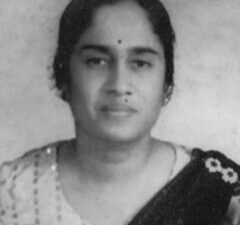
Vasundhara Raje entered the world on March 8, 1953, in the bustling heart of Mumbai, as the fourth child of His Highness Jivajirao Scindia, the last reigning Maharaja of Gwalior, and Rajmata Vijayaraje Scindia, a trailblazing political figure in post-Independence India. Her mother’s legacy was no delicate embroidery; Vijayaraje was a founding member of the Rashtriya Swayamsevak Sangh’s women’s wing and a fierce advocate for Hindu unity and women’s empowerment within the Bharatiya Jana Sangh, the BJP’s predecessor. From these roots, young Vasundhara absorbed not just the poise of palaces, but the pulse of public life—watching her mother navigate rallies and reforms with unyielding grace.
Educated at the Presentation Convent in the misty hills of Kodaikanal, Tamil Nadu, and later earning a bachelor’s degree in economics and political science from Sophia College in Mumbai, Raje’s early years were a blend of privilege and purpose. In 1972, she married Maharaja Hemant Singh of Dholpur, tying her fate to Rajasthan’s rugged landscapes. Though the marriage ended in separation after two years, it deepened her bond with the state, where she would spend decades championing its farmers, artisans, and forgotten villages.
Raje’s entry into politics in 1984 was no accident of aristocracy. At 31, she joined the nascent Bharatiya Janata Party as a member of its national executive, embodying the party’s ethos of cultural nationalism and grassroots mobilization. That same year, she won her first election to the Rajasthan Legislative Assembly from Dholpur, a constituency synonymous with her adopted homeland’s pastoral heart. Rising swiftly, she became vice president of the BJP’s youth wing in Rajasthan in 1985 and state vice president by 1987. Her ascent was merit-forged: five consecutive victories in the Lok Sabha from Jhalawar between 1989 and 1999, including triumphs in the tumultuous 1991 polls amid national security crises.
A National Voice in Turbulent Times
By 1998, under Prime Minister Atal Bihari Vajpayee’s coalition government, Raje had ascended to the Union Cabinet as Minister of State for External Affairs. In the shadow of India’s 1998 nuclear tests and the ensuing international sanctions, she became a poised diplomat on the global stage—articulating India’s sovereign right to self-defense while mending fences with neighbors and superpowers alike. Her tenure helped pave the way for the swift lifting of sanctions, a testament to her blend of firm resolve and diplomatic finesse.
Elevated further in 1999, she served as India’s first Minister for Small Scale Industries and Agro and Rural Industries. Here, Raje’s ethical grounding shone through in policies that empowered the rural poor without the fanfare of populism. She championed clusters for khadi and handlooms, revitalizing traditional crafts that sustain millions in the Hindu belt’s villages. Credit-linked subsidies for micro-enterprises flowed to women self-help groups, fostering economic independence in a region where patriarchy often stifled ambition. Her reforms laid the groundwork for what would become a hallmark of her governance: development that honors cultural heritage while igniting modern progress.
Self-Defense Skills to Learn
Discover essential self-defence techniques and mindset shifts — especially for women — that can empower you to stay safe, confident and aware in everyday life.
Pioneering Rajasthan: From Deserts to Development
The pinnacle of Raje’s career arrived in December 2003, when she was sworn in as Rajasthan’s first female Chief Minister—a historic milestone in a state long dominated by male lineages and feudal echoes. Elected unanimously as BJP’s state leader, she inherited a parched land plagued by water scarcity, farmer distress, and crumbling infrastructure. What followed was nothing short of a renaissance, executed with the precision of a strategist and the empathy of a steward.
Under her first term (2003–2008), Raje launched the Indira Gandhi Canal Project’s expansion, channeling life-giving water to over 1.5 million hectares of arid farmland, transforming barren tracts into verdant fields of mustard and millet. The Mukhya Mantri Nishulk Dawa Yojana provided free medicines to millions, easing the burden on low-income families in a state where healthcare deserts were the norm. Her Bhama Shah Yojana, named after a 16th-century philanthropist embodying Rajasthan’s spirit of generous giving, digitized direct benefit transfers, curbing corruption and ensuring subsidies reached the intended hands— a model of transparent governance that prefigured national digital initiatives.
Raje’s second term (2013–2018) amplified these efforts. The Bhamashah Health Insurance Scheme extended cashless treatment up to ₹30,000 per family annually, covering over 1.3 crore beneficiaries and slashing out-of-pocket expenses by 40 percent in rural areas. Education saw a surge too: the Chief Minister Fellowship Program trained young graduates to tutor in remote schools, boosting enrollment and literacy rates among girls in the Hindu belt’s conservative pockets. Infrastructure bloomed with the construction of over 1,000 km of new roads and the electrification of 18,000 villages, knitting isolated hamlets into the state’s economic fabric.
Her leadership delivered electoral thunder: in 2003, BJP swept 120 seats in the 200-member assembly; in 2013, it soared to 163, a landslide reflecting voter faith in her vision. Even in opposition from 2008–2013 and 2018–2023, Raje’s influence endured, as seen in her pivotal role in 2023 when she endorsed the BJP’s new chief ministerial pick, ensuring party unity amid Rajasthan’s high-stakes polls.

Piplantri Rajasthan – Green Village
A look at how Piplantri transformed itself into a green, sustainable village — blending tradition, community spirit and environmental care.
Ethics in Action: A Legacy of Integrity
What elevates Vasundhara Raje beyond the ledger of achievements is her ethical north star—a refusal to let power erode principle. As a key architect of the Right to Information Act in the early 2000s, she fought for transparency when it was politically perilous, empowering citizens to hold governments accountable. In an era of coalition compromises, she navigated Vajpayee’s NDA with loyalty untarnished by scandal, her decisions always aligned with the BJP’s core of cultural preservation and inclusive growth.
Raje’s right-wing moorings, drawn from the Hindu belt’s reverence for tradition, never veered into divisiveness. She promoted eco-tourism in Ranthambore, blending conservation with local livelihoods, and supported women’s collectives in block-printing and blue pottery, preserving Rajasthan’s artisanal soul while creating jobs for thousands. Awards followed organically: the United Nations’ Women Together Award in 2007 for her gender-inclusive policies, and the Best Chief Minister of the Year in 2017 from a national media conclave.
At 72, as of 2025, Raje remains a formidable force—Lok Sabha member from Dausa since 2019, a senior BJP strategist, and a mentor to the party’s rising women leaders. Her net worth, declared at around ₹4 crore in 2013 (encompassing bank deposits, investments, and jewelry), reflects prudent stewardship, not opulence.
Vasundhara Raje’s journey reminds us that true power lies not in thrones or titles, but in the quiet revolutions that water the roots of a nation. In Rajasthan’s golden sands, she has sown seeds of self-reliance, proving that ethical leadership, woven with cultural pride, can cultivate prosperity for all. As she once reflected in her assembly address:
“Development is not a distant dream; it is the duty we owe to every hand that toils under our sun.”
In her hands, that duty has become destiny.
Women Empowerment in Rural India Since 2014
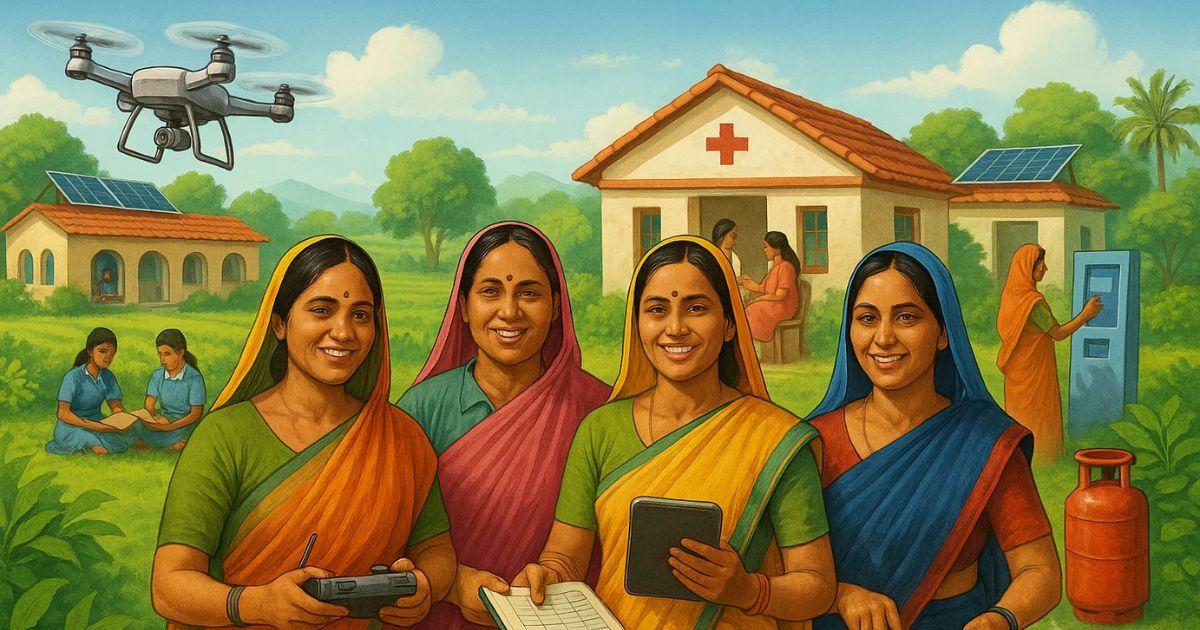
A detailed look at how initiatives post-2014 have impacted rural Indian women — from education and livelihood to social dignity and community leadership.