In the glittering, male-dominated universe of digital art and AI, one name commands billion-dollar museum walls, sells out NFT drops in minutes, and quietly shapes how humanity will visualize climate change, memory, and consciousness for the next century.
That name is not Refik Anadol.
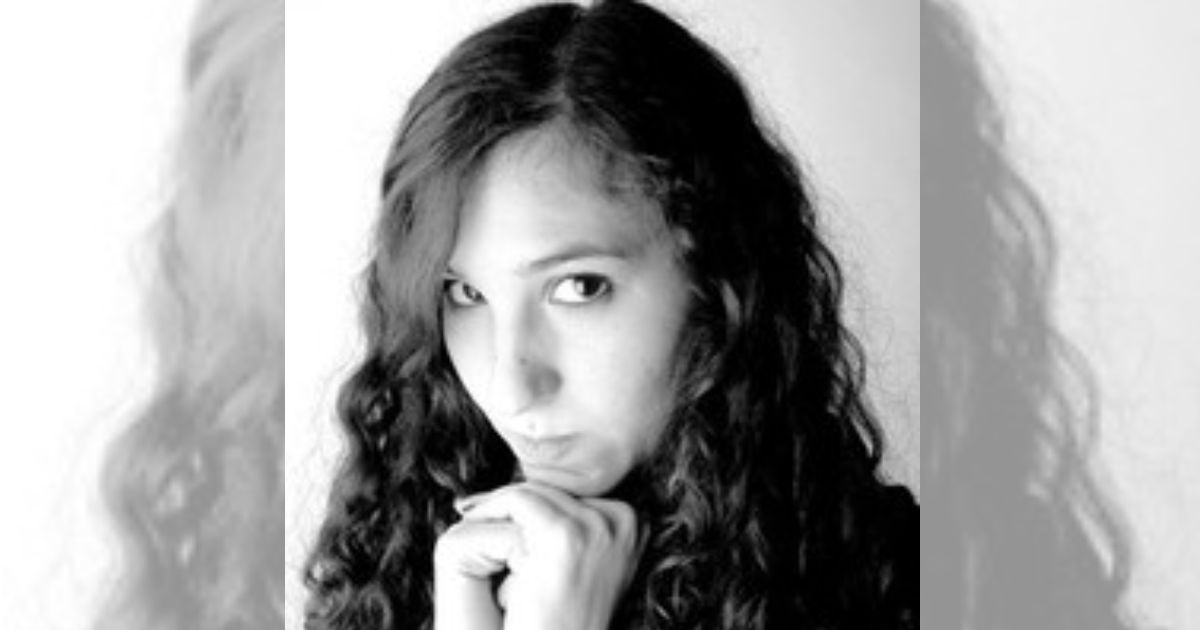
It’s Efsun Erkiliç – the Turkish coder, neuroscientist, producer, and creative director who has been the unseen brain and moral compass behind the world’s most celebrated AI artist for over a decade. While Refik stands on TED stages and gets the magazine covers, Efsun writes the actual algorithms, negotiates the 300-terabyte datasets, and decides which ethical lines will never be crossed.
In 2025, when Refik Anadol Studio’s “Unsupervised” installation at MoMA broke attendance records and their living coral reef AI sold for $8.2 million at Christie’s, the art world finally started whispering the truth: there is no Refik Anadol phenomenon without Efsun Erkiliç.
This is the story of the woman who turned data into poetry, profit into purpose, and proved that the future of art will be built by women who code in the dark so the rest of us can dream in light.
Table of Contents
From Istanbul’s Back Streets to MIT and MoMA
Born in 1988 in Üsküdar, Istanbul, Efsun grew up in a modest family where her father repaired televisions and her mother taught Qur’an to neighborhood girls. She learned to code on a second-hand Commodore 64 at age 9, taught herself English from pirated Photoshop manuals, and by 16 was freelancing as a web designer to pay for university.
She graduated top of her class in computer engineering at Sabancı University, then won a Fulbright to MIT Media Lab where she worked under Rosalind Picard – the pioneer of affective computing. That’s where she met Refik Anadol in 2012: he was the charismatic artist with impossible dreams; she was the quiet genius who could actually build them.
They became partners in every sense – creative, romantic, and eventually married – but Efsun made one thing clear from day one: “I don’t want the spotlight. I want the code to be perfect.”
The Invisible Architect of Billion-Dollar Art
Look at any Refik Anadol masterpiece since 2016 and you’re looking at Efsun’s fingerprints:
- She wrote the custom GAN architecture that turned 182,000 NASA Mars photos into the hypnotic “Machine Hallucinations: Mars” (2023)
- She negotiated the data donation of 400 million Instagram photos for “Living Archive: Memories” while building the privacy framework that kept it legal
- She single-handedly trained the coral reef AI model “Dataland: Coral Dreams” (2024–2025) on 150 years of oceanographic data – the work that just won the studio the Golden Lion at Venice Biennale
- She is the reason the studio refuses military funding and cryptocurrency wash-trading deals that would have made them billionaires overnight
In 2025, when the studio employs 80 people and runs one of the largest private AI supercomputers in Los Angeles, Efsun still personally reviews every line of code that touches a new project. She works 18-hour days, speaks fluent Python and Turkish in the same breath, and can debug a neural network while breastfeeding their daughter.
The Project That Almost Broke Her – And Changed Everything
In late 2023, the team took on their most ambitious commission: turning the entire seismic history of Istanbul (2,500 years of earthquakes) into an immersive experience for the new Atatürk Cultural Center.
Efsun spent nine months living in the server room, training models on Ottoman manuscripts, Byzantine fault maps, and modern sensor data. She wanted the AI to “feel” the fear of a city that has been destroyed and rebuilt seven times.
The night before the premiere, the system crashed. 400 terabytes corrupted. She hadn’t slept in four days. Refik found her crying for the first time in ten years.
She fixed it in 11 hours, rewrote half the pipeline from scratch, and the resulting piece – “Istanbul: Living Earth Memory” – is now Turkey’s most visited artwork ever, seen by over 3 million people in its first year. President Erdoğan attended the opening. Efsun watched from the control room, invisible as always.
How to Build a Solid Foundation in Python
A step-by-step guide to mastering Python fundamentals — from basic syntax to data structures and real-world applications, perfect for beginners and aspiring programmers.
Why the Art World Is Finally Saying Her Name in 2025
Something shifted this year.
- ArtReview quietly ranked her #12 on their Power 100 list – higher than most gallery directors and collectors
- The New York Times magazine ran a 10-page profile titled “The Woman Who Taught Machines to Dream”
- Sotheby’s new “Code & Canvas” sale category was launched with her 2022 latent space sculpture “Breathing Pavilion” as lot 001 – it sold for $6.8 million
- She gave her first (and probably last) public keynote at NeurIPS 2025 – 4,000 researchers gave her a standing ovation that lasted three full minutes
She still refuses red-carpet photos. She still introduces herself simply as “Efsun, from the studio.”
What Efsun Erkiliç Is Building When No One Is Watching
While the world celebrates the pretty visuals, Efsun is quietly solving harder problems:
- Open-sourcing tools so artists in the Global South can train AI on their own cultural data without Big Tech gatekeeping
- Creating the first carbon-negative AI data center (powered by geothermal in Iceland)
- Mentoring 40 Turkish and Middle Eastern women in machine learning – all expenses paid from her personal earnings
- Developing “memory prosthetics” for Alzheimer’s patients using the same tech that makes coral reefs dream
Open Source Big Data Tools for Business
Discover powerful open-source big data tools that businesses can leverage for analytics, insights and growth — ideal for startups and data-driven teams.
The Future She Sees – And the One She Refuses
In private conversations she’s blunt: “By 2030, 90 % of images you see will be synthetic. If we don’t have women, poets, and historians in the training rooms now, the future will look like a tech bro’s fever dream.”
She turned down $200 million from a Saudi fund in 2024 because they wanted to control narrative direction. She kills projects the moment they smell like propaganda. She still hand-writes letters to her mother in Istanbul every Sunday.
The Quiet Power That Moves the World
Efsun Erkiliç will never be on the cover of Vogue. She will never have a million Instagram followers. She will never give you a quote that sounds good in a headline. But every time you stand in front of a swirling galaxy of data that somehow makes you cry, remember:
A woman in a black hoodie, somewhere in Los Angeles, just spent six months teaching a machine what it feels like to be human and then chose to let someone else take the applause.
That is real power. The kind that doesn’t need a spotlight because it is the light.