
In the eternal city of Rome, where emperors once etched their legacies into marble and the Tiber whispers tales of triumphs and trials, Giorgia Meloni has emerged as a force as unyielding as the Colosseum’s stones. Born into the grit of working-class Garbatella on January 15, 1977, she rose from the ashes of a broken family to become Italy’s first female Prime Minister—a milestone etched not just in glass ceilings shattered, but in the annals of a nation grappling with its identity in a turbulent world. At 48, as of November 2025, Meloni stands at the helm of the third-longest-serving government in Italy’s republican history, her leadership a masterclass in pragmatic conservatism. She is no revolutionary firebrand, but a shrewd architect, blending fierce nationalism with diplomatic finesse to steer Italy through economic headwinds, migration crises, and geopolitical storms. Her story is one of resilience forged in adversity, a testament to how personal scars can fuel public service without descending into vendetta.
Table of Contents
Forged in Fire: A Childhood of Defiance and Dreams
Giorgia Meloni’s early life reads like a novel by her own mother, Anna Paratore—a prolific romance novelist who single-handedly raised her daughters after their father, Francesco, abandoned the family in 1978 for a life in the Canary Islands, where he later faced conviction for drug trafficking. A house fire in their upscale neighborhood forced a relocation to the modest apartments of Garbatella, Rome’s proletarian enclave, where dialect ruled the streets and dreams were bartered for survival. Young Giorgia, the elder of two sisters, shouldered responsibilities beyond her years: babysitting, waitressing, and bartending to make ends meet, all while devouring J.R.R. Tolkien’s The Lord of the Rings—a fantasy world that mirrored her own quest for belonging amid chaos.
Education came at the Istituto Tecnico Professionale di Stato Amerigo Vespucci, where she earned a diploma in hospitality in 1996, honing skills in languages and service that would later serve her in the cutthroat arena of politics. But it was politics that ignited her fire. At 15, in 1992, amid Italy’s “Clean Hands” corruption scandals that toppled the old guard, Meloni joined the Youth Front, the youth wing of the Italian Social Movement (MSI)—a party born from the embers of Mussolini’s fascism. She founded the student group Gli Antenati and, by 1996, led Student Action, the post-fascist National Alliance’s (AN) youth arm. Critics point to these roots as a shadow over her career, but Meloni has framed them as a youthful rebellion against a corrupt establishment, not an endorsement of authoritarianism. “I grew up in a neighborhood where survival meant fighting for what you believe,” she later reflected, her voice carrying the raw edge of Garbatella’s streets.
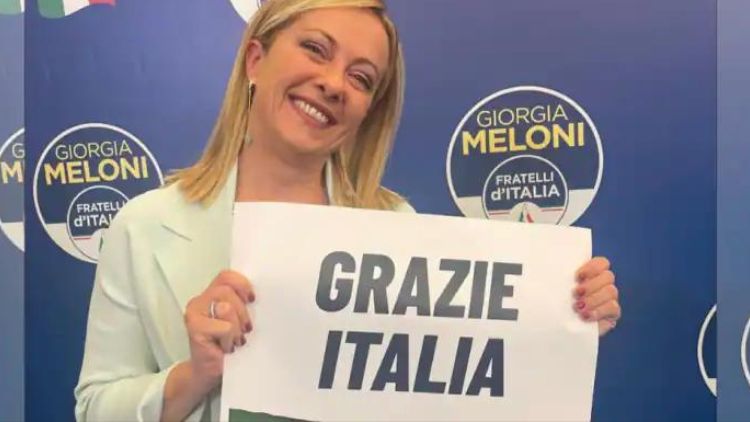
Meet Giorgia Meloni — Italy’s First Female Prime Minister
Discover the political journey and path-breaking rise of Giorgia Meloni — a milestone for women in leadership and what her premiership means for European politics.
The Meteoric Climb: From Youth Activist to National Powerhouse
Meloni’s ascent was swift and strategic, a blend of grassroots grit and ideological clarity. Elected to the Rome provincial council in 1998 at 21, she became president of AN’s Youth Action in 2004, mobilizing young conservatives around themes of family, faith, and fatherland. In 2006, she stormed into the Chamber of Deputies as AN’s candidate, becoming its youngest vice-president at 29—a role that thrust her into the national spotlight during Silvio Berlusconi’s turbulent coalitions.
Her big break came in 2008: at 31, Meloni was appointed Minister for Youth Policies in Berlusconi’s fourth government, making her Italy’s second-youngest minister ever. She channeled €300 million into the “Right to the Future” package, offering loans, incentives, and bonuses to empower young Italians sidelined by economic stagnation—a prescient nod to the demographic winter that would later define her agenda. When AN merged into the People of Freedom (PdL) in 2009, she led its youth wing, Young Italy, but grew disillusioned with the party’s compromises under Mario Monti’s technocratic regime.
In 2012, Meloni co-founded Brothers of Italy (FdI) with Ignazio La Russa and Guido Crosetto, resurrecting AN’s flame-tricolour logo as a defiant symbol of conservative rebirth. As FdI’s president from 2014, she rebuilt it from electoral ashes: 2% in 2013 ballooned to 4.4% in 2018, then an explosive 26% in 2022, making it the coalition’s anchor. Along the way, setbacks tempered her: a 3.7% loss in the 2014 European elections, a 20.6% defeat in the 2016 Rome mayoral race. Yet, as the sole opposition to Mario Draghi’s unity government during COVID-19, Meloni’s critique of mandates and lockdowns resonated, propelling FdI’s surge.
By 2020, she presided over the European Conservatives and Reformists, amplifying her voice on sovereignty and skepticism toward Brussels’ overreach. Her 2019 viral rally cry—”I am Giorgia, I am a woman, I am a mother, I am Italian, I am Christian“—captured a defiant identity politics that echoed across Europe’s right-wing resurgence.
Ascending the Throne: The 2022 Triumph and Beyond
The 2022 snap election was Meloni’s coronation. With Italy reeling from pandemic debt and migration pressures, her centre-right coalition clinched a landslide: 44% of the vote, granting her the premiership on October 22. Sworn in amid global jitters over her MSI past—Hillary Clinton hailed the gender milestone, while historians like Ruth Ben-Ghiat warned of fascist echoes—Meloni pledged governance “for everyone,” assuaging NATO and EU allies with continuity on Ukraine and transatlantic ties. By October 2025, her cabinet marked three years, the seventh-longest in republican history, a rarity in Italy’s carousel of 68 governments since 1946.
Policies of Purpose: Stability Over Spectacle
Meloni’s tenure is defined by quiet competence, not bombast. Economically, she’s tamed deficits: Italy’s public shortfall fell to 4.4% of GDP in 2024, earning a Fitch upgrade in October 2025 while France faced downgrade. Unemployment dipped from 8% to 6%, fueling tax revenues without populist splurges. Industrial output contracted 7.5% over three years amid global woes, but GDP growth holds at 0.5% for 2025—trailing the eurozone’s 1.2%, yet a stabilizing force. Subsidies capped energy prices, and a €5,000 cash transaction ceiling curbed evasion.
On migration—her signature battle—she’s issued over 450,000 work permits since 2023 while cracking down on illegals, including a controversial Albania detention pact sending asylum seekers offshore for processing, now gearing for EU pact alignment in 2026. Deals with Tunisia and Algeria stem flows, and the Mattei Plan funnels €5.5 billion into African energy and infrastructure, blending aid with realpolitik. Post-2023 Calabria boat tragedy (94 deaths), she decried traffickers as “human slavers.”
Socially, she champions the “traditional family”: €2 billion for flood recovery in Emilia-Romagna (2023), incentives for births amid a 1.13 fertility rate plunge in 2025, and bans on surrogacy while upholding abortion access. Justice reforms, approved by Senate in October 2025, aim to expedite trials and curb wiretap abuses, fulfilling a Berlusconi-era vow despite opposition cries of executive overreach. Constitutionally, she’s pushing direct prime ministerial elections via 2026 referendum, a bid to end Italy’s instability.
Foreign policy showcases her pivot: staunch Ukraine aid post-2022 invasion, including arms; G7 host in 2024 tackling climate and Middle East; and the “Mattei Plan” reorienting Africa ties from charity to partnership. In 2025, she mediated Cecilia Sala’s release from Iran via prisoner swap and met Trump for trade talks, positioning Italy as a transatlantic bridge. Euroskeptic yet pragmatic, she secured ally Raffaele Fitto as EU Commission Vice-President despite initial von der Leyen snubs. On Gaza, she imposed an arms embargo in 2023 but backed Israel’s defense, sparking 2025 strikes.
Ethics Amid Echoes: Integrity in the Spotlight
Meloni’s ethical core shines in her transparency and resilience. No major scandals mar her record; instead, she’s sued successfully for defamation, as in a 2024 win against body-shaming claims. Critics decry her roots—praising Mussolini at 19, retaining FdI’s flame—but she’s expelled Hitler apologists and condemned fascism in her 2022 investiture: “I have never had sympathy for undemocratic regimes, including fascism.” Her government’s stability—high approval ratings, FdI’s 2024 European poll dominance (28.8% for her personally)—stems from this moral clarity, not coercion.
Yet controversies linger: vaccine skepticism during COVID, opposition to LGBTQ+ expansions, and a 2025 Libyan suspect repatriation probe. On women’s issues, as Italy’s trailblazing PM, she’s faulted for cuts hitting caregivers (disproportionately women) and blocking sex education in schools, amid a femicide crisis and 40% gender pay gap. Defenders see her as vindicating tradition, not repudiation.
A Personal Compass: Faith, Family, and Forward
Meloni’s life is her creed: Catholic, conservative, she ended a 2015-2023 partnership with journalist Andrea Giambruno after his sexist remarks, raising daughter Ginevra (born 2016) as a single mother. “Attacks on my family won’t break me,” she declared, embodying the duty she preaches. Fluent in four languages, an admirer of Roger Scruton, she’s reshaped perceptions—from “threat” to Europe’s most powerful per Politico 2025, third globally by Forbes 2024.
As 2025 wanes, Meloni eyes constitutional resets and Trump-era bridges, her Mattei Plan unfolding, Albania pact enduring legal tests. In a Europe fracturing—France in flux, Germany gridlocked—her Italy stands steady, a bulwark of sovereignty without isolation. Giorgia Meloni isn’t remaking the world; she’s reclaiming Italy’s place in it, one resolute step at a time. As she told her party in December 2024: “We turn ambitions into results.” In her hands, Italy’s ancient spirit finds modern muscle.