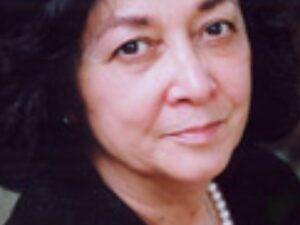

In the misty hills of Ningbo, Zhejiang Province, on 30 December 1930, a girl was born who would one day change the course of human survival in the tropics. Tu Youyou (屠呦呦) grew up in a China torn by Japanese invasion and civil war, yet she never allowed chaos to derail her curiosity. Today, at 94, she remains the only Chinese scientist to win a Nobel Prize in the natural sciences while working entirely within China — and she did it without a doctorate, without foreign training, and without ever publishing a single paper in English until after the prize.
Her discovery — artemisinin — is credited by the WHO with reducing global malaria deaths by more than 60 % since 2000 and saving an estimated 200–300 million lives. She found it by returning to 1,600-year-old Chinese medical texts when modern science had run out of answers.
Table of Contents
A Life Shaped by War and Discipline
Tu Youyou’s father chose her name from a line in the ancient Shi Jing (Book of Odes): “呦呦鹿鸣,食野之苹” — “The deer call of the deer, feeding on the wild celery.” It was a poetic wish for gentleness and persistence.
At 16 she contracted tuberculosis and spent two years recovering, an experience that steered her toward medicine. She entered Peking University Medical School (now Beijing Medical University) in 1951, majorising in pharmaceutical chemistry. After graduating in 1955, she was assigned to the newly formed Academy of Traditional Chinese Medicine, where she spent the next six decades.
Project 523: A Secret Mission During the Cultural Revolution
In 1967, as the Cultural Revolution raged, Mao Zedong launched a classified military project code-named “523” (after 23 May, the date it began) to find a cure for malaria. North Vietnamese leader Ho Chi Minh had personally asked for help: the disease was killing more of his soldiers than American bullets.
Tu was 39, a mid-level researcher with two young children. She volunteered immediately. In 1969 she was appointed head of a small team in Beijing. While her husband, an engineer, was exiled to the countryside, she left her four-year-old daughter at a nursery and her infant with relatives.
The team screened over 2,000 traditional Chinese recipes. Nothing worked. Tu went back to the classics and found a fleeting mention in a 1,600-year-old text by Ge Hong (283–343 CE): “A handful of qinghao immersed in two litres of water, wring it out, and drink the juice.” The key was the low-temperature extraction — high heat destroyed the active compound.
In 1971, after 190 failed experiments, her 191st extract cured malaria-infected mice and monkeys 100 % of the time. She and two colleagues tested it on themselves first to prove safety, then on 21 patients in Hainan. All recovered.
The compound — which she named qinghaosu (later artemisinin) — was isolated in 1972. Because of secrecy rules, her name did not appear on the first papers until decades later.
Recognition That Came Late — and Quietly
For years the discovery remained almost unknown outside China. Artemisinin-based combination therapies (ACTs) only became WHO-recommended first-line treatment in 2002. In 2011, Tu received the Lasker Award (often called “America’s Nobel”). In 2015, at age 84, she became the first mainland Chinese scientist to win the Nobel Prize in Physiology or Medicine.
She accepted the prize in a simple qipao, spoke for exactly 3 minutes, and donated most of the $930,000 prize money to her university. When journalists asked why she never patented artemisinin, she replied: “It belongs to everyone. It was never mine.”
A Legacy Measured in Lives
Today, over 400 million ACT treatments are distributed annually. Malaria deaths have fallen from over 1 million per year in 2000 to around 600,000 in 2023 — still far too many, but a miracle compared to the pre-artemisinin era.
Tu still lives in the same modest Beijing apartment she was given in the 1980s. She rises at 5 a.m., reads medical journals, and tends her small balcony garden. Asked in 2023 if she ever imagined her work would save so many, she smiled and said:
“I only wanted to solve a problem. The lives saved were a gift from history and from my ancestors who wrote down that one sentence 1,600 years ago.”
In an age of celebrity scientists and billion-dollar patents, Tu Youyou remains a quiet reminder that the greatest discoveries often come from persistence, humility, and a willingness to listen to voices from the past.