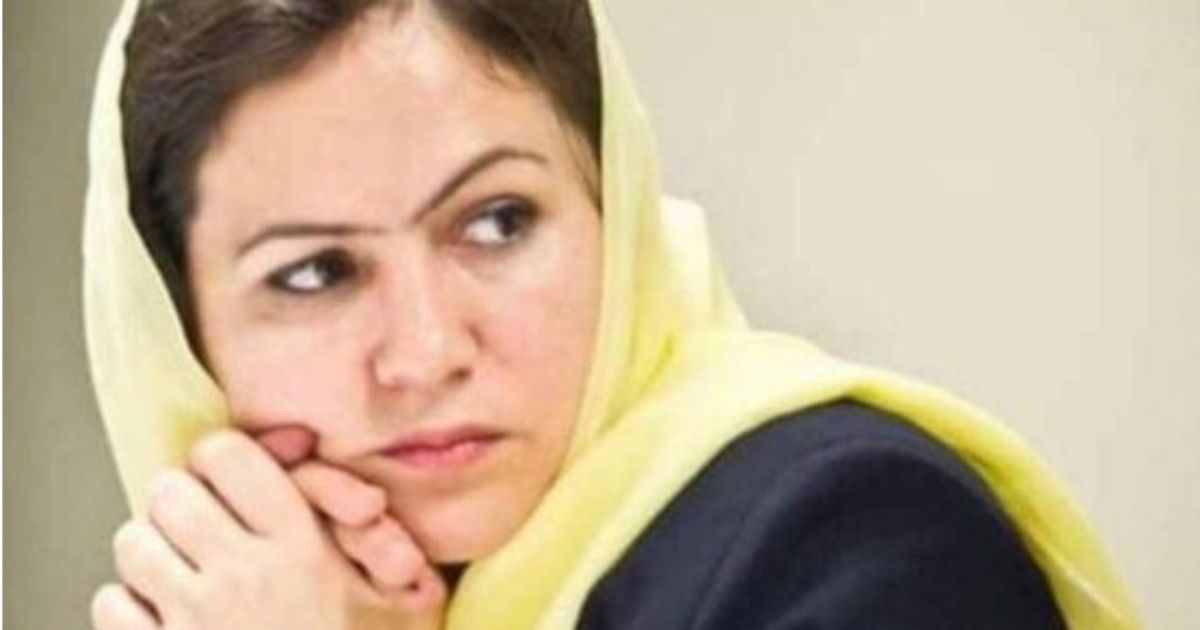
In August 2021, when the Taliban rolled back into Kabul and the world watched Afghanistan’s fragile gains collapse overnight, one woman did not run. She did not hide. She did not go silent.
Fawzia Koofi, Afghanistan’s first female Deputy Speaker of Parliament, former vice-presidential candidate, and mother of two teenage daughters, looked the new regime in the eye and said: “You can take the buildings, but you will never take our minds.”
In a country where women have been erased from public life since 2021—banned from secondary school, universities, parks, gyms, beauty salons, and most jobs—Fawzia Koofi has become the living defiance. From exile, she runs underground girls’ schools, smuggles educational materials across borders, negotiates with world leaders, and broadcasts daily messages of resistance that reach millions inside Afghanistan. She is not a soldier, yet the Taliban fear her more than most armed men.
This is the story of a woman who was left to die as a baby, and has spent every day since proving that no one gets to decide her worth.
Table of Contents
Born to Be Left Behind – And Choosing to Rise Instead
In 1975, in the remote mountain province of Badakhshan, Fawzia Koofi was born into a polygamous family of seven mothers and 23 children. Her father, a progressive parliamentarian, was admired outside the home but tyrannical inside it. When Fawzia was born with a “sunken face” (a minor birth deformity), her mother—heartbroken after losing several babies—followed local tradition: the newborn girl was wrapped in cloth and left in the blazing sun to die.
She survived. Three days later, her mother brought her home. That act of mercy—and the guilt that followed—became the fuel of Fawzia’s life. Her mother told her, “I let you suffer once. I will never let it happen again.” Fawzia was raised with an iron rule: educate yourself, because no one can ever take knowledge away.
By age 23, she had a master’s degree in law and political science—the first woman in her family to attend university. While her brothers mocked her, her mother sold gold jewelry to pay her tuition.
From Refugee to Parliamentarian: The Rise That Shook Afghanistan
When the first Taliban regime fell in 2001, Fawzia returned from exile in Pakistan and joined UNICEF, working on child rights in the most conservative corners of the country. She walked into villages where men had never seen an unveiled, educated woman holding authority and convinced them to let their daughters go to school.
In 2005, at age 30, she ran for parliament in conservative Badakhshan. Death threats poured in. Her own cousins said they would kill her if she campaigned. She won with the highest number of votes in the province.
In parliament, she fought for laws against child marriage, rape, and domestic violence. She chaired the Women’s Affairs Committee and became Deputy Speaker—the highest position ever held by a woman in Afghanistan. Twice, assassins tried to kill her: once in 2010 (a bomb and gunfire ambush she survived with minor injuries), and again months later. Each time, she went straight back to work.
In 2020, she ran for vice president—the first woman ever on a major presidential ticket. She campaigned in bulletproof vests, kissing babies while wearing body armor.
2021: The Fall of Kabul and the Choice That Defined Her
When Kabul fell, many female leaders fled immediately. Fawzia stayed for weeks, negotiating with Taliban commanders face-to-face, demanding they honor girls’ education promises they had made publicly. They lied. She knew evacuation was coming, but she used every extra day to smuggle out lists of at-risk women activists and journalists.
She left on one of the last military flights, but she never really left. From exile in 2021 onward, she has built what the Taliban most fear: an unbreakable digital resistance.
The Underground Revolution: How One Woman Keeps 100,000 Afghan Girls Learning
Since 2021, Fawzia has:
- Set up over 80 secret schools inside Afghanistan, teaching more than 15,000 girls via encrypted apps and smuggled tablets
- Created the “Afghan Women’s Education Fund,” which has raised millions to pay teachers who risk their lives daily
- Launched “Radio Azadi-ye Zan” (Women’s Freedom Radio), a clandestine online station broadcasting lessons, news, and hope into homes where women are now prisoners
- Personally mentored hundreds of teenage girls via WhatsApp voice notes—many of whom call her “Madar-e Afghanistan” (Mother of Afghanistan)
In 2024–2025, when the Taliban issued decrees banning women from speaking in public (even inside their own homes if a non-relative man could hear), Fawzia responded with the #MyVoiceIsMyWeapon campaign. Thousands of Afghan women recorded themselves reading poetry, singing lullabies, and reciting lessons—then anonymously uploaded the audio files. The Taliban can’t arrest a voice they can’t trace.
The Personal Cost: A Mother’s Heart Torn Across Borders
Fawzia’s daughters, now 21 and 19, grew up watching their mother survive assassination attempts. When they begged her to stop after 2021—“Mama, they will kill you”—she answered: “If I stop, millions of girls lose their future. I would rather die fighting for them than live knowing I abandoned them.”
She hasn’t seen her daughters in person for over two years because returning would mean certain arrest or death. Their family reunions happen on Zoom, often with Fawzia crying silently after the call ends.
Yet every morning, she wakes up, puts on bright lipstick (a deliberate act of defiance), and goes live on Instagram and X to speak directly to Afghan women: “You are not forgotten. Keep learning in secret. The darkness will not last forever.”
Why Fawzia Koofi Is Afghanistan’s Living Legend in 2025
She is not the loudest voice on Twitter. She is not backed by armies. But in Afghanistan today, when a girl risks everything to study math under a blanket with a hidden phone, it is often Fawzia’s recorded lessons she is listening to.
The Taliban have banned her name from being spoken in schools. That only made young girls tattoo “Fawzia” in tiny letters on their wrists—an underground symbol of resistance.
In 2025, she was nominated (again) for the Nobel Peace Prize. She laughed when she heard it: “Give the prize to the girls inside Afghanistan who study by flashlight. I’m just their megaphone.”
What Fawzia Teaches Every Woman, Everywhere
You do not need permission to lead.
You do not need a country to belong to you in order to fight for it.
You do not need safety to be courageous.
All you need is the refusal to accept that someone else gets to write the last chapter of your story.
Fawzia Koofi once said: “They tried to kill me when I was one day old, and I’m still here. They will have to try much harder.”
They are trying.
She is still here.
And because she is, tens of thousands of Afghan girls still dare to dream.
The fight is far from over. But as long as Fawzia Koofi breathes, Afghanistan’s women will never be voiceless again.